Burdens of a White Dress
Burdens of a White Dress is a long-term photographic project examining how systems of belief, moral authority, and coercive power are internalized and embodied over time. The work considers the body not as a site of spectacle, but as a psychological and social terrain shaped by ideology—where obedience, shame, and self-surveillance become habitual and self-sustaining.
Structured as a series of interrelated movements, the project traces different phases of internalized control: from external imposition and ritualized instruction, through absorption and self-regulation, to moments of fracture, recognition, and partial release. Rather than presenting a linear narrative, the work unfolds through repetition and variation, emphasizing how belief systems persist by embedding themselves in gesture, posture, and bodily restraint.
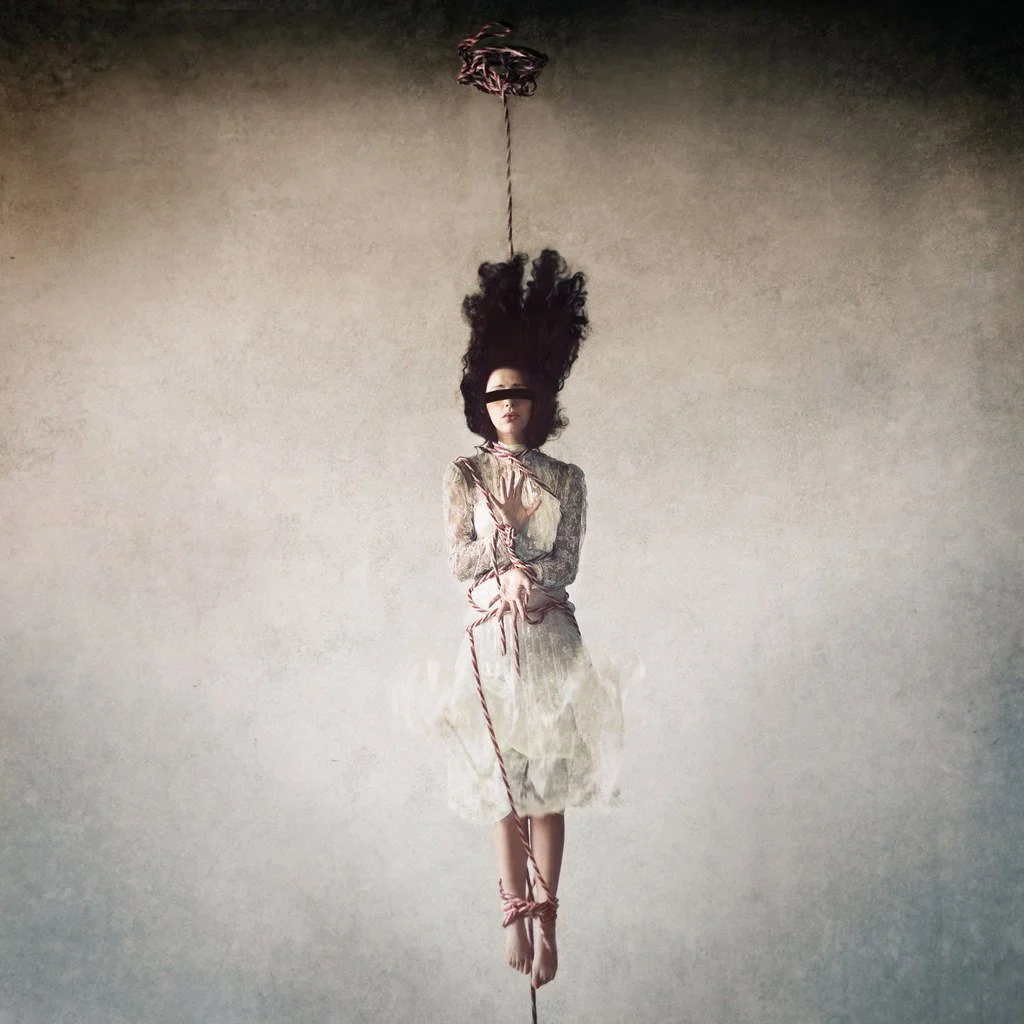
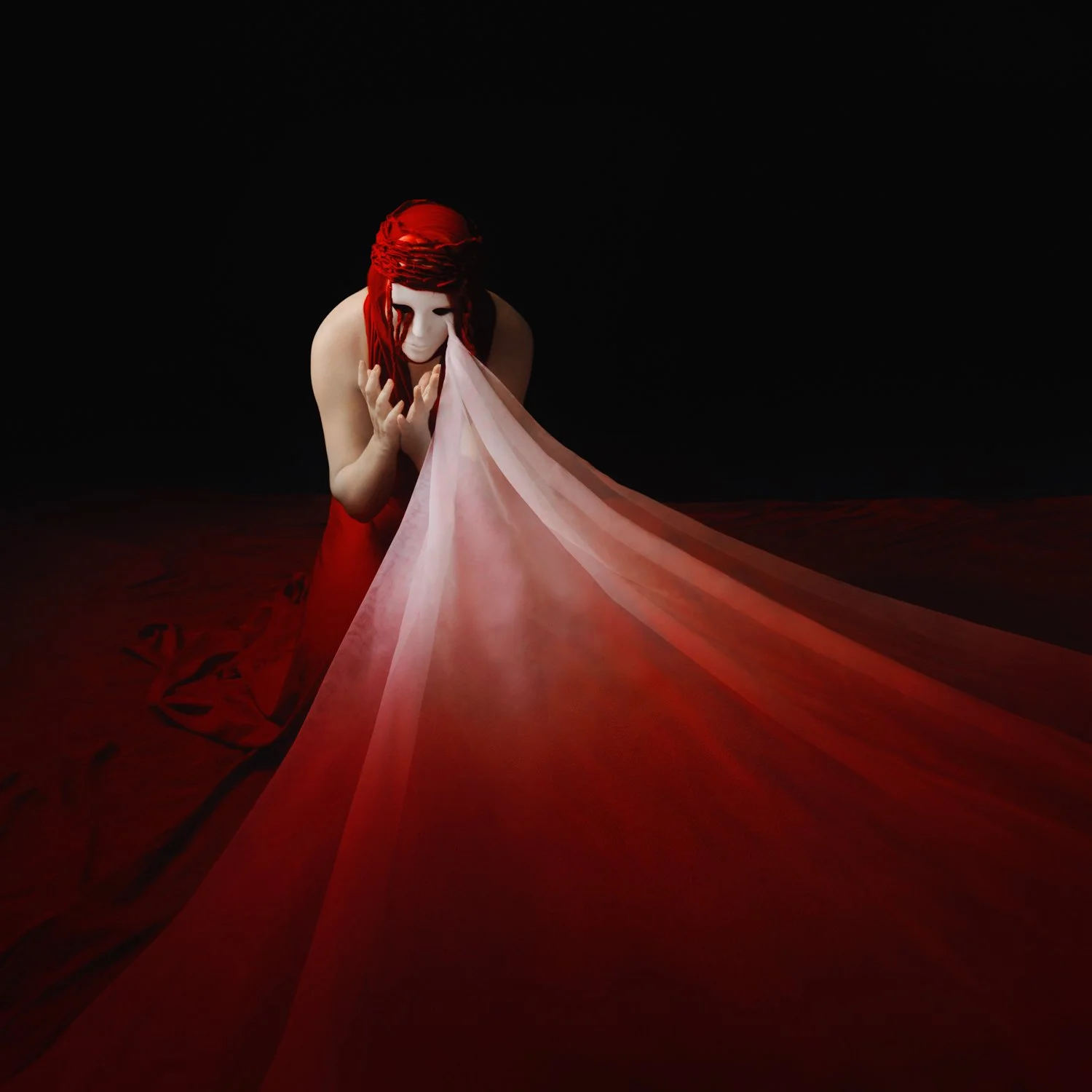
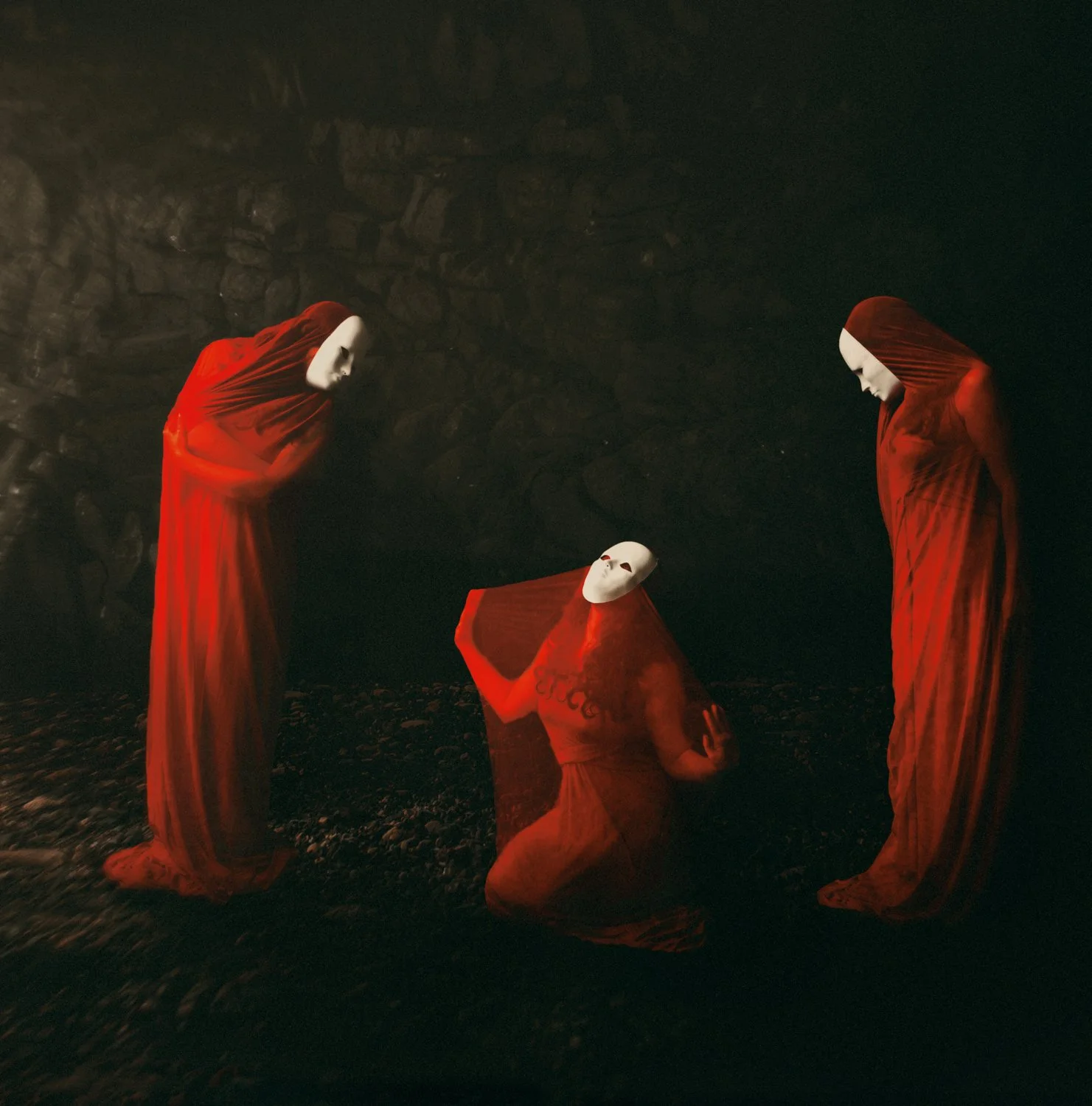
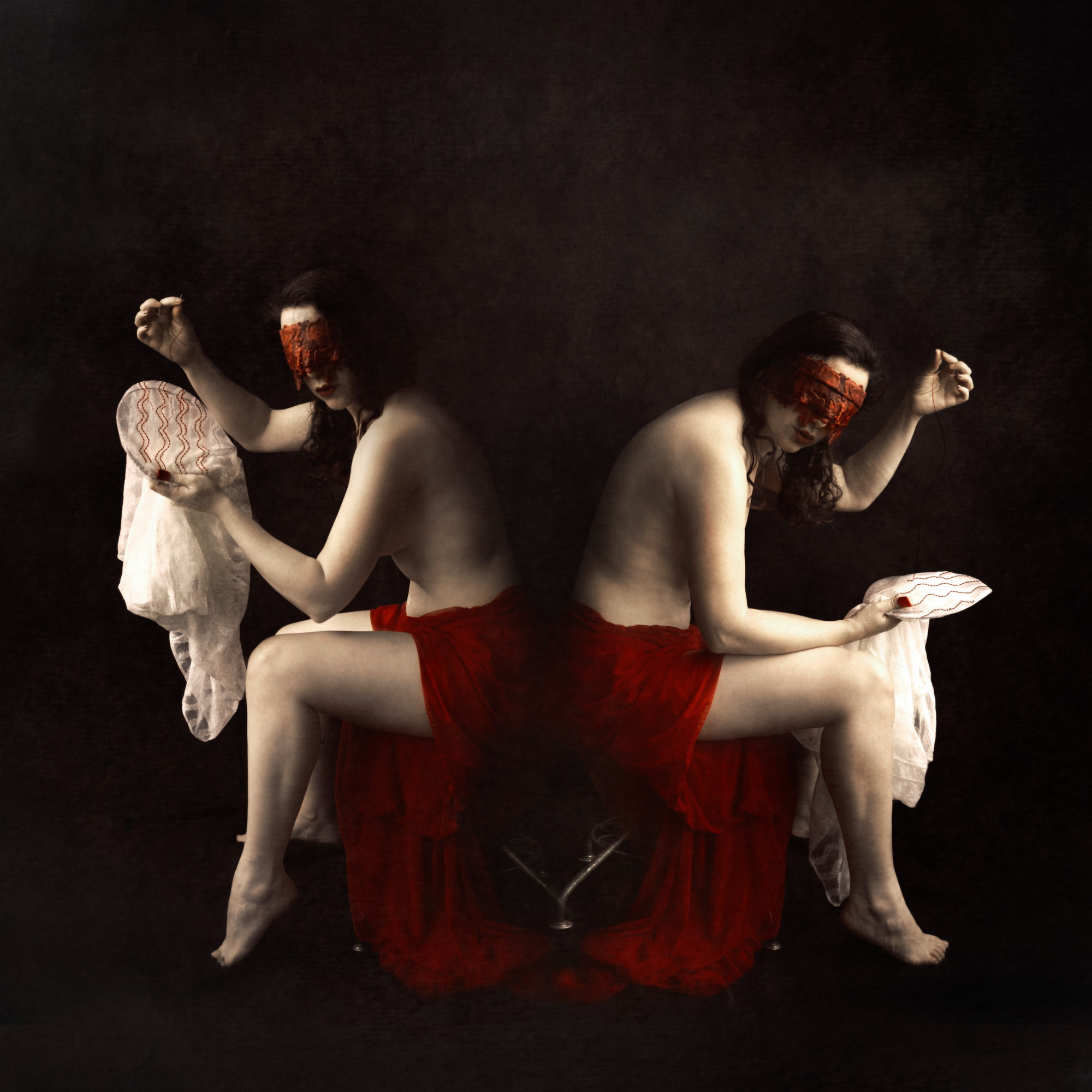
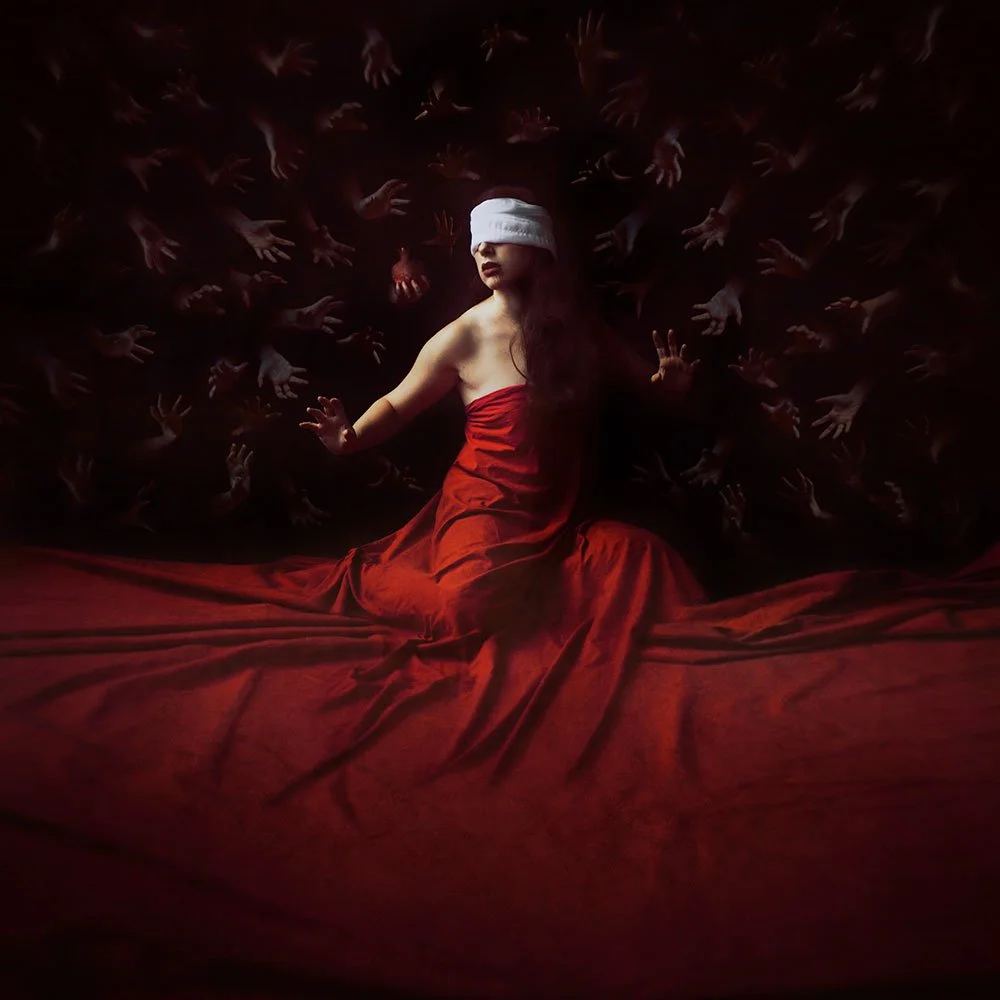
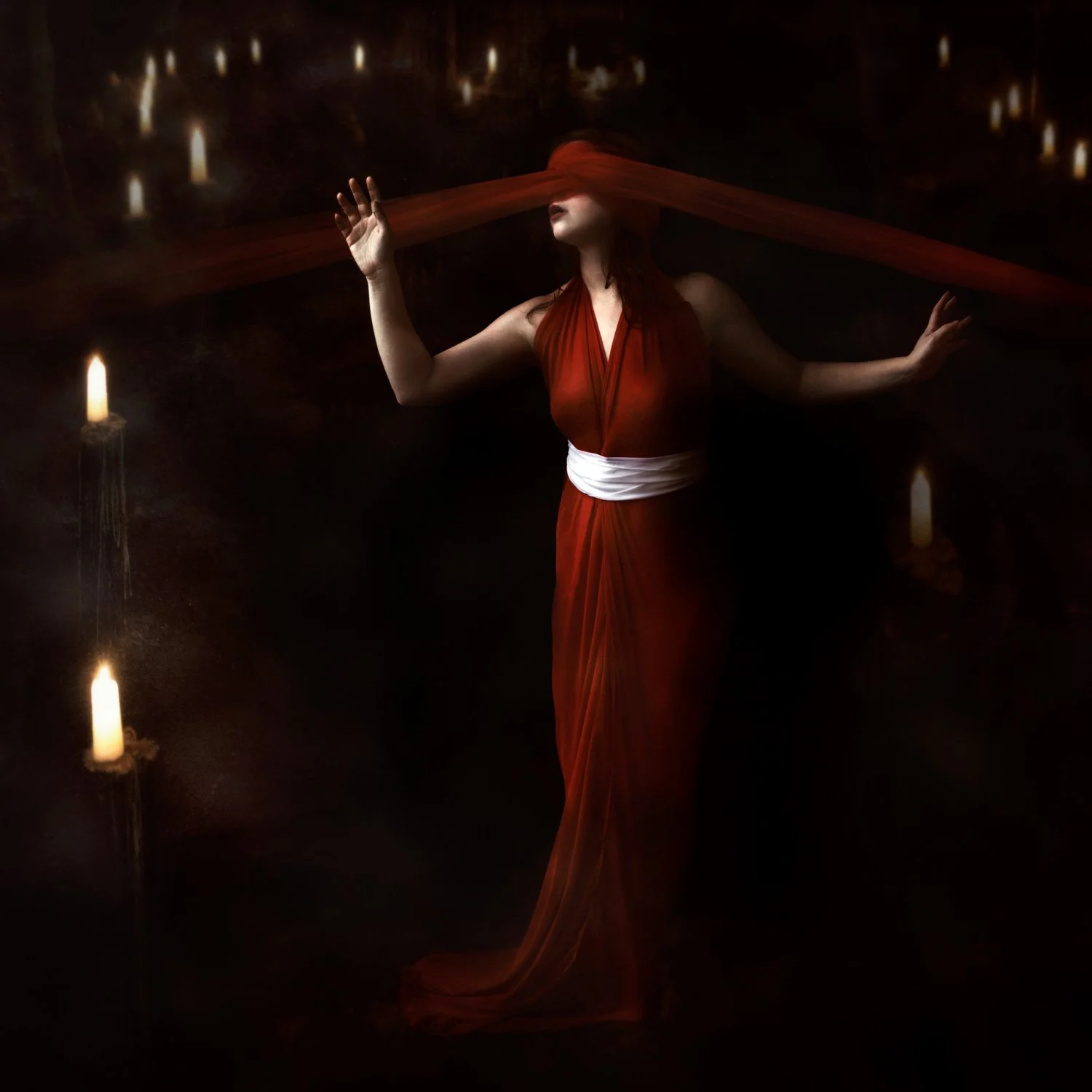
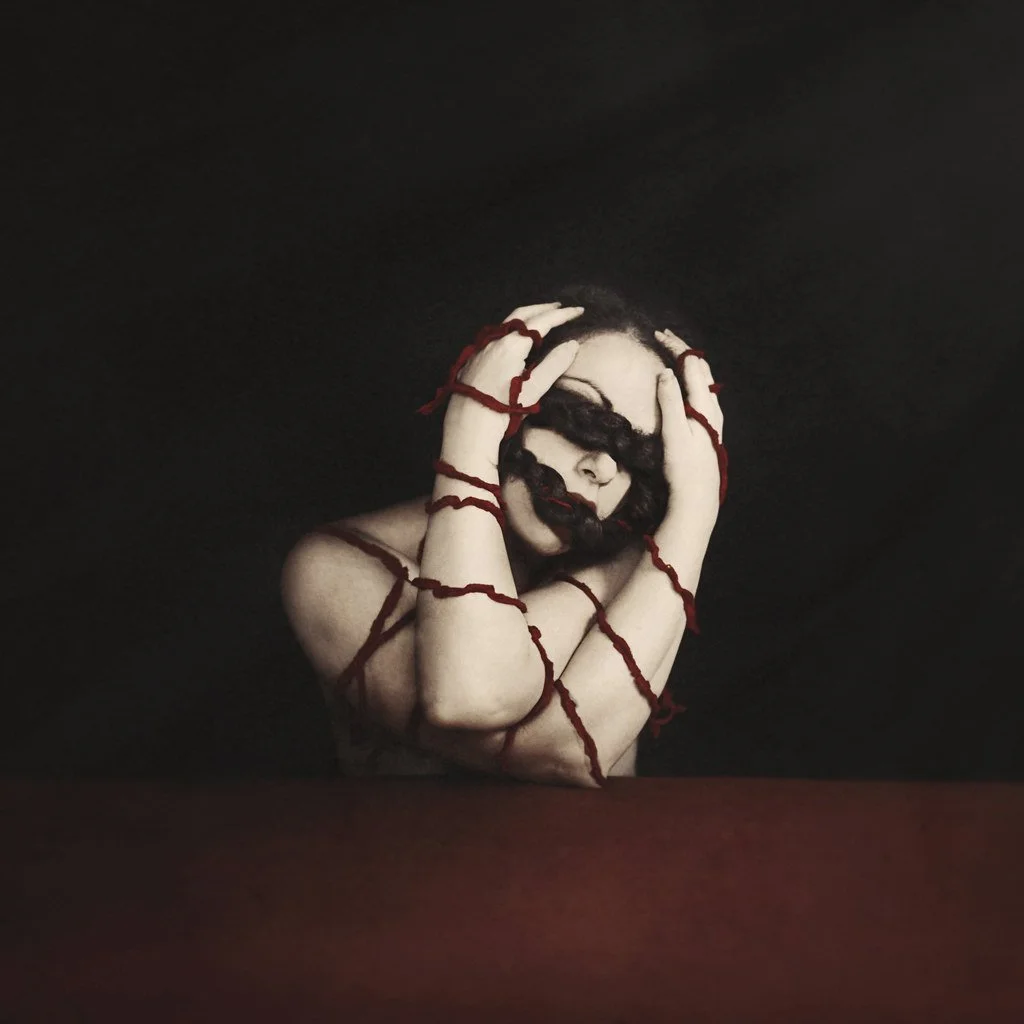
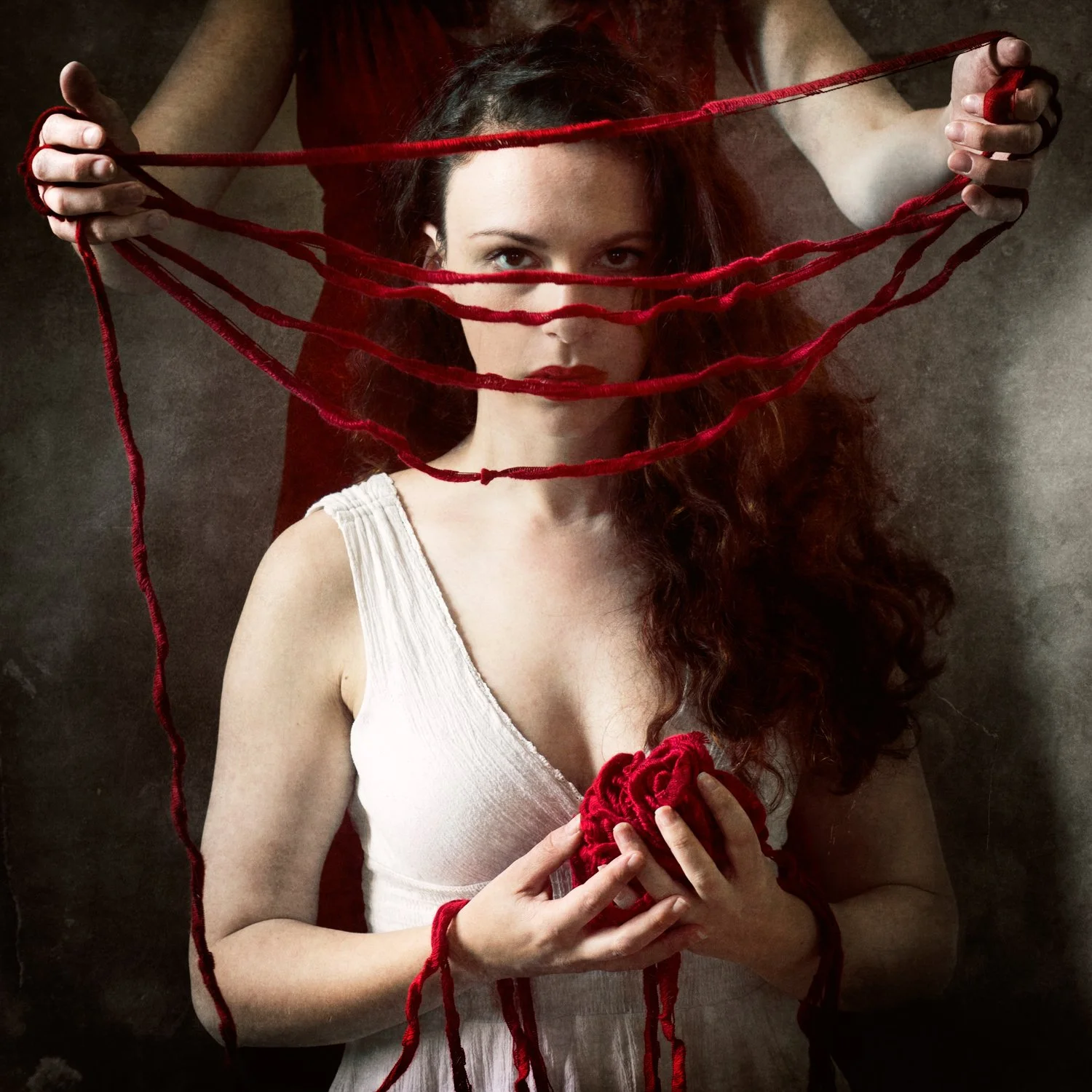
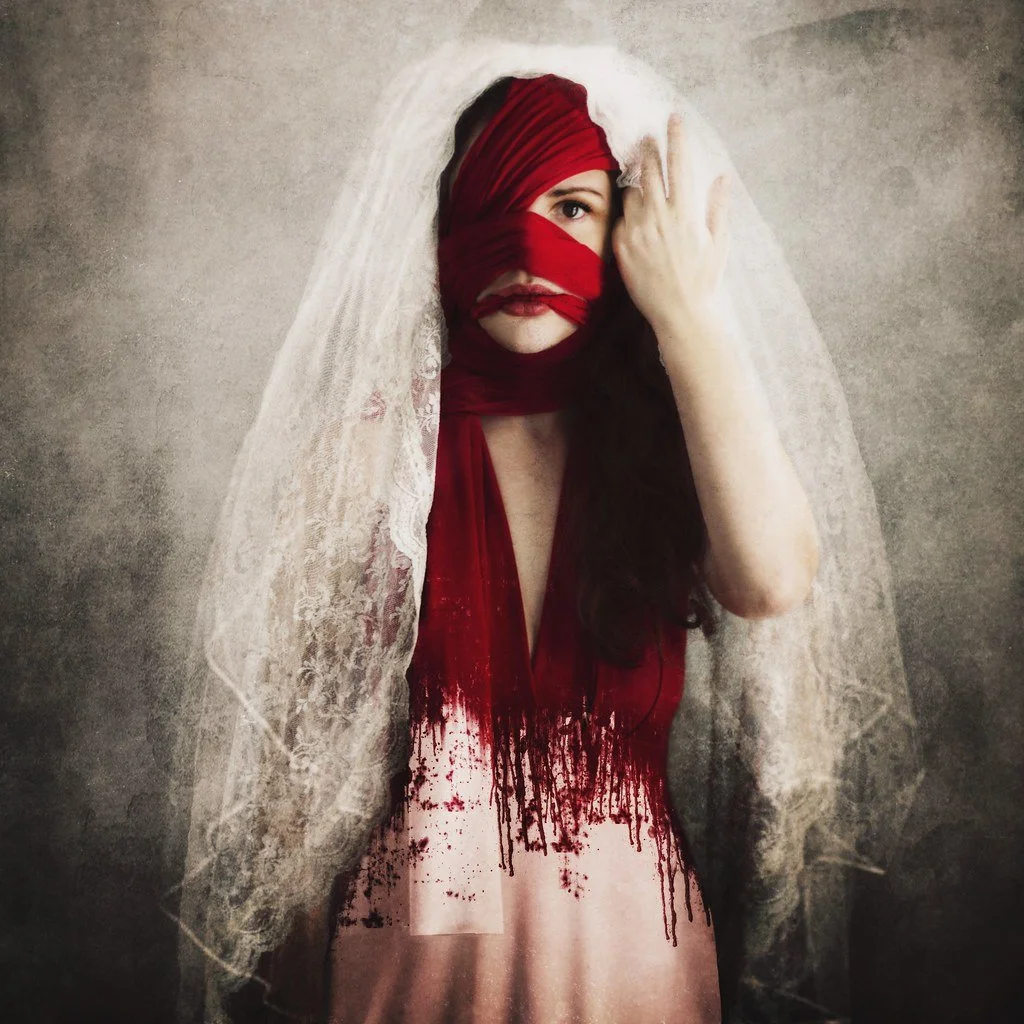
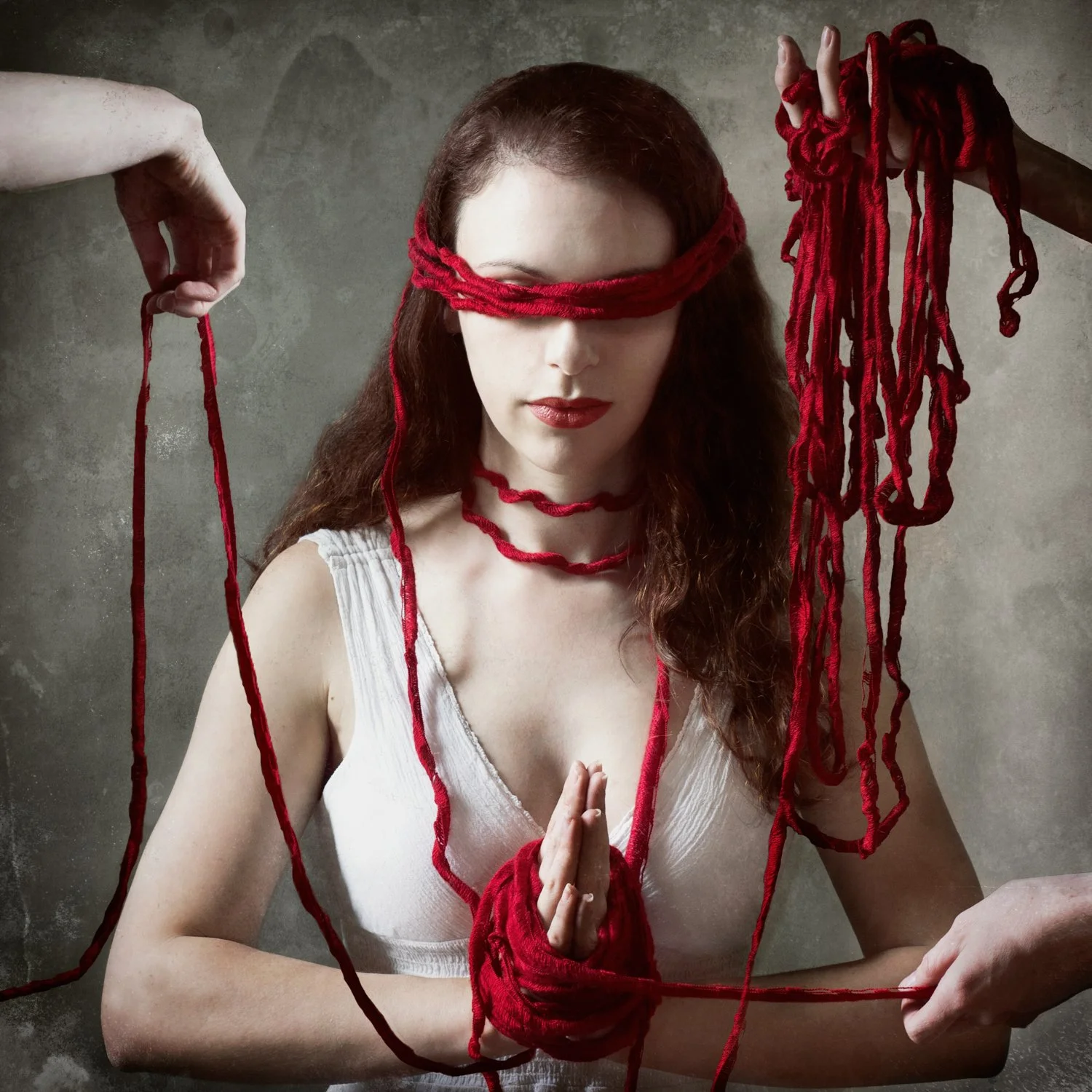
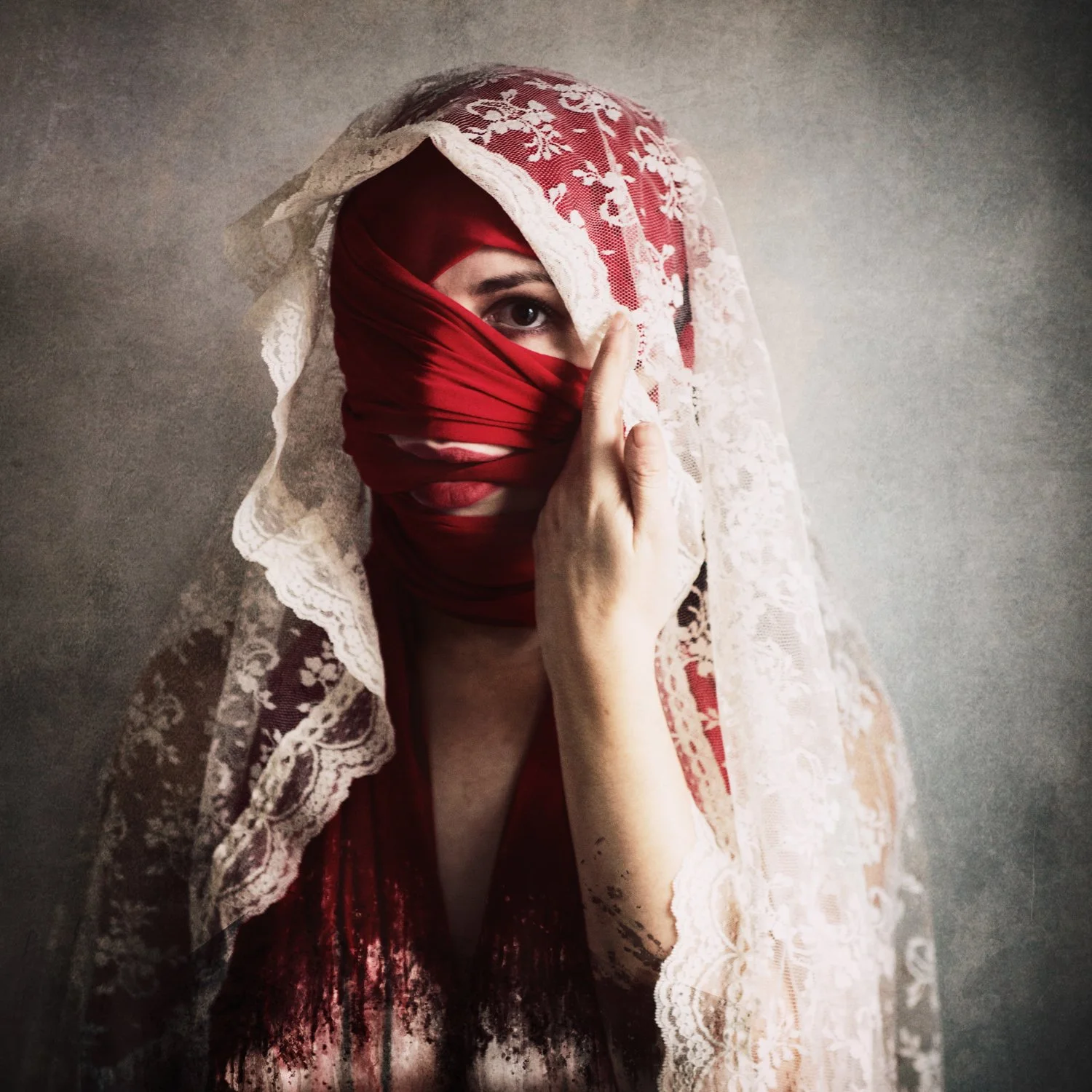
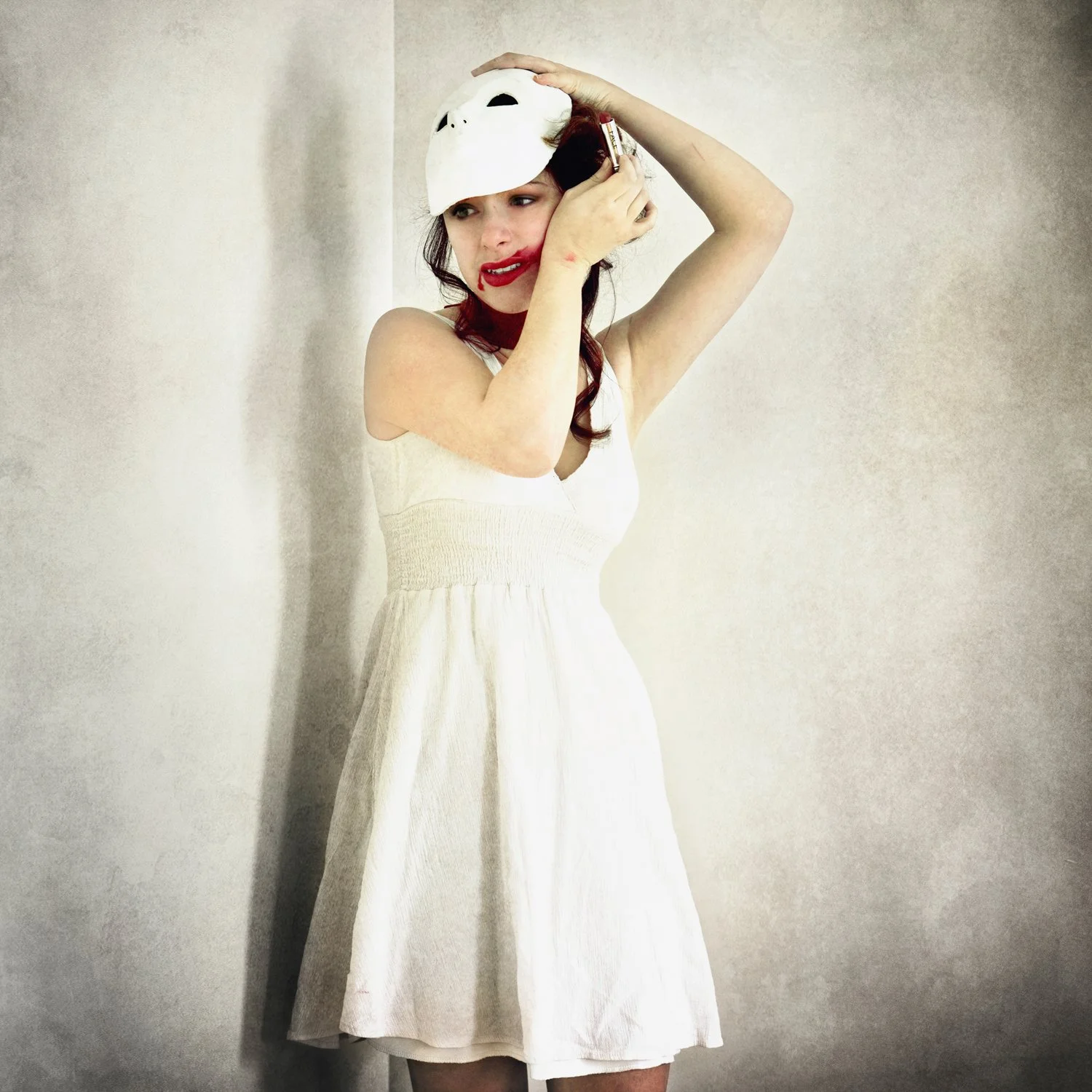
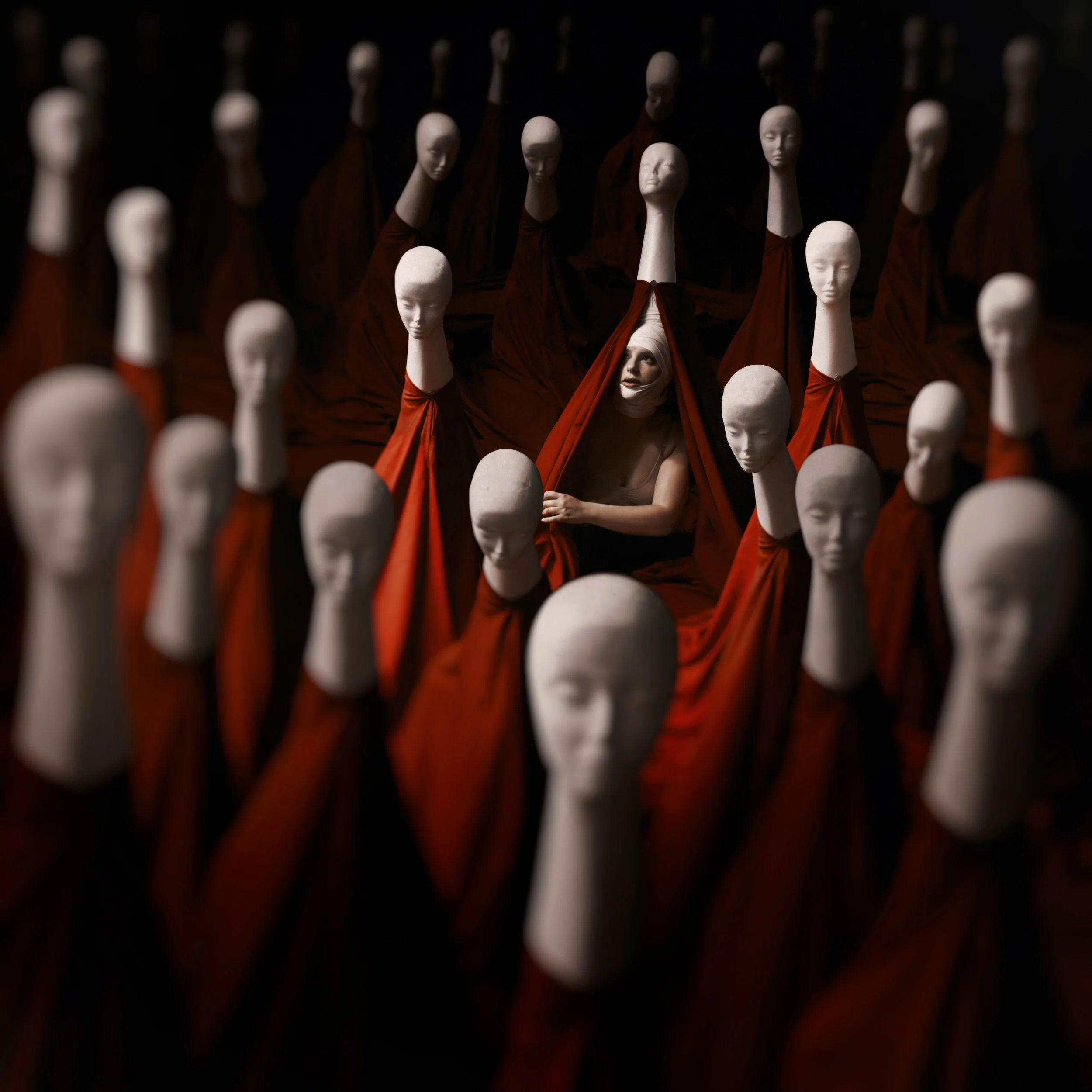
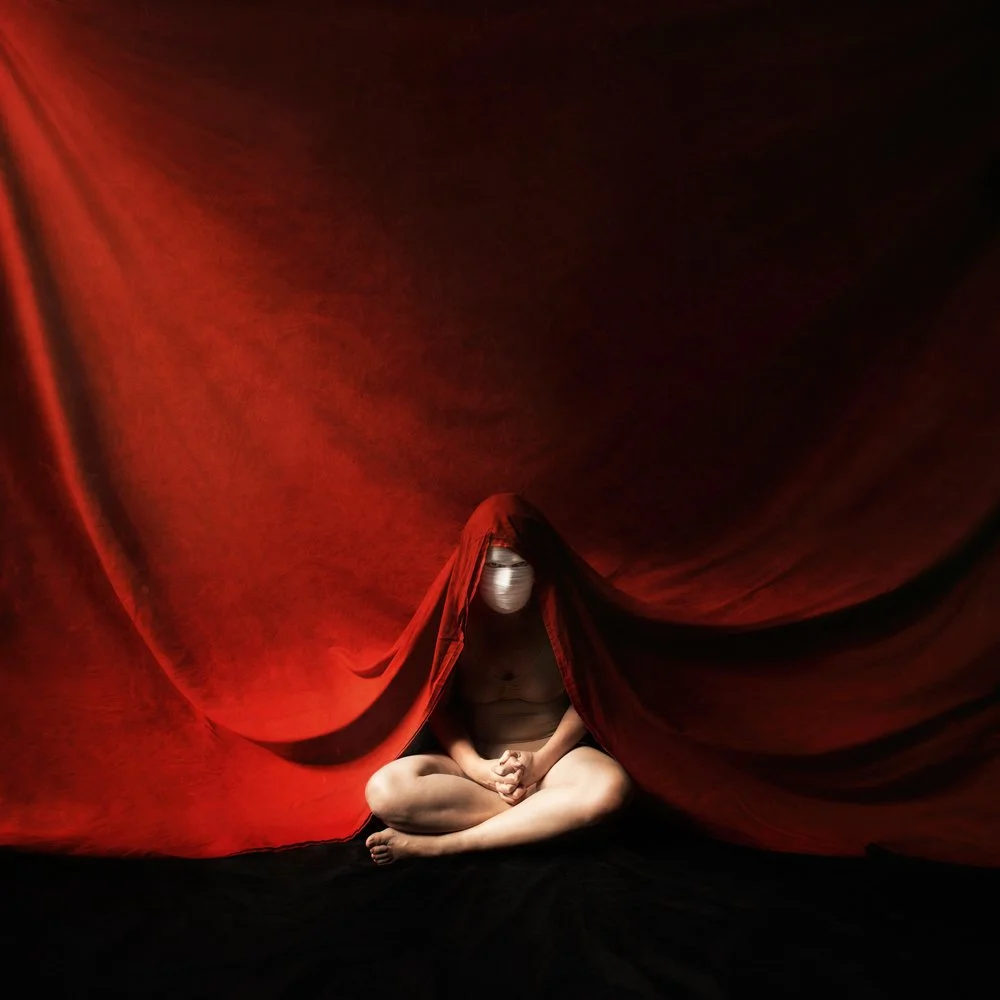
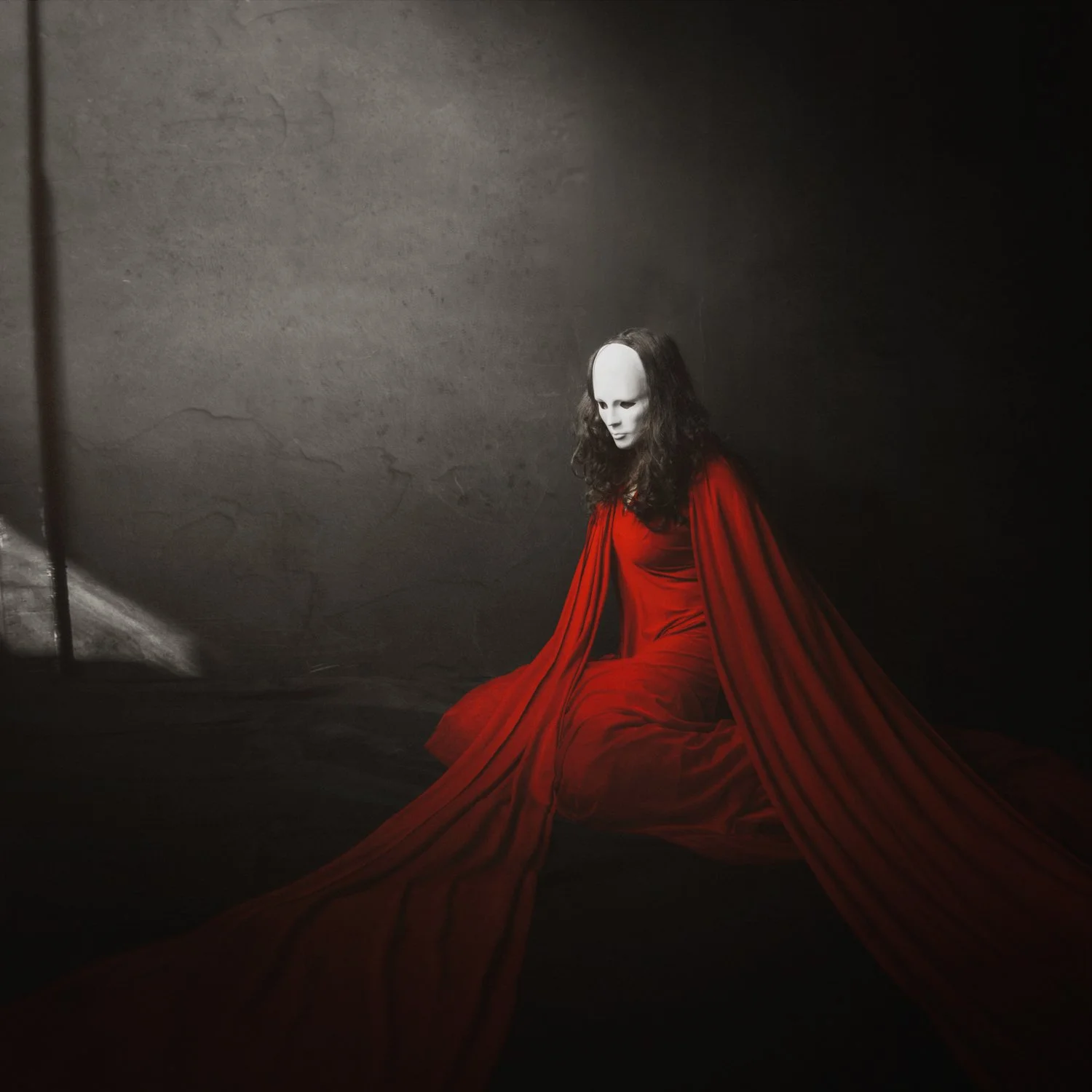
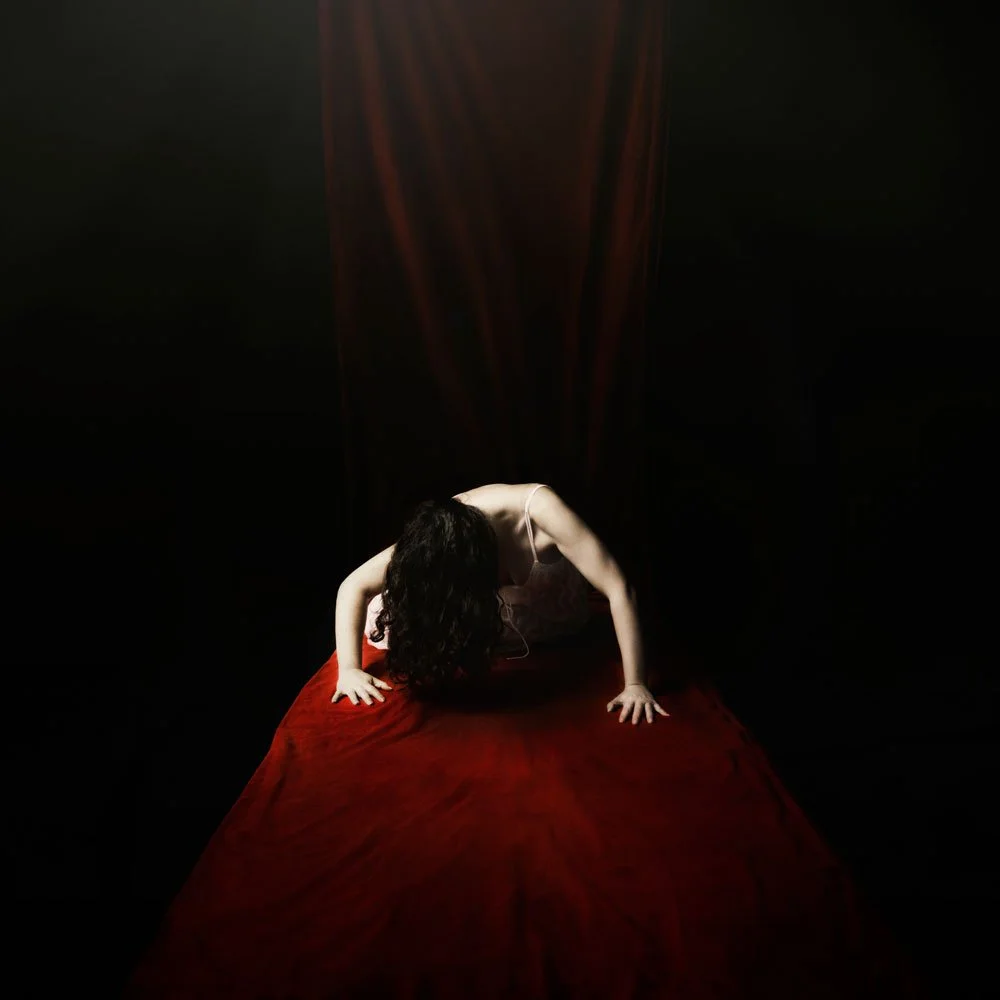
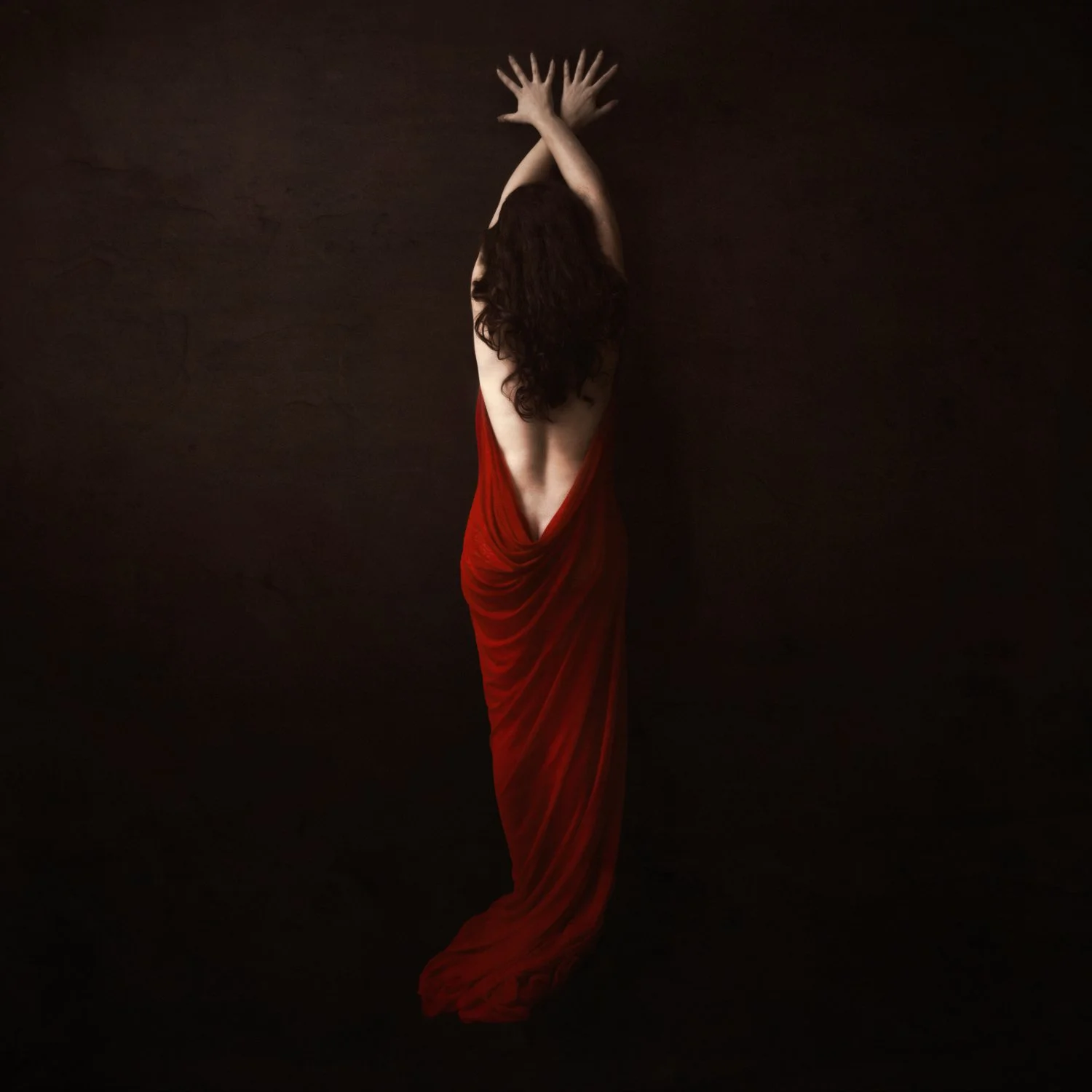
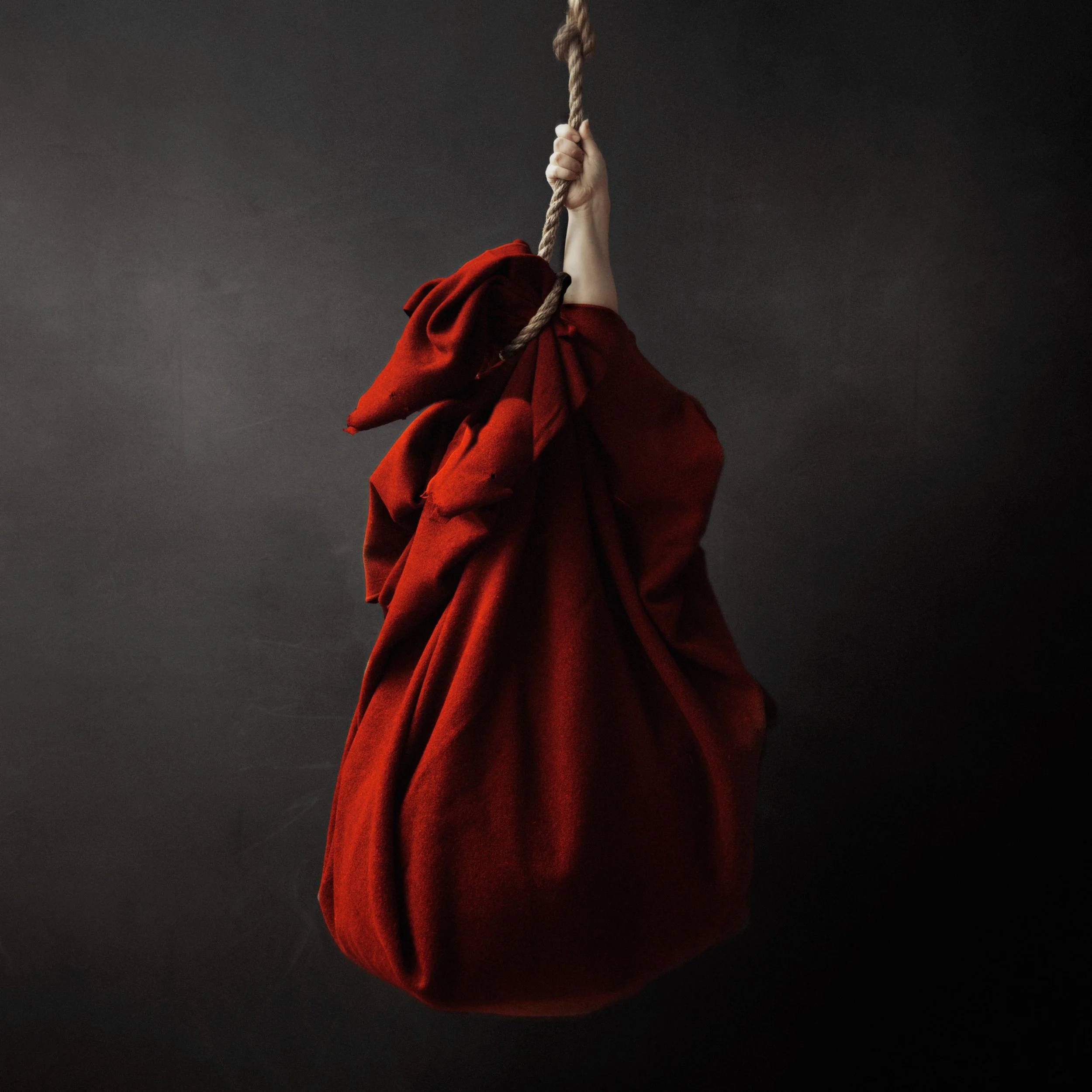
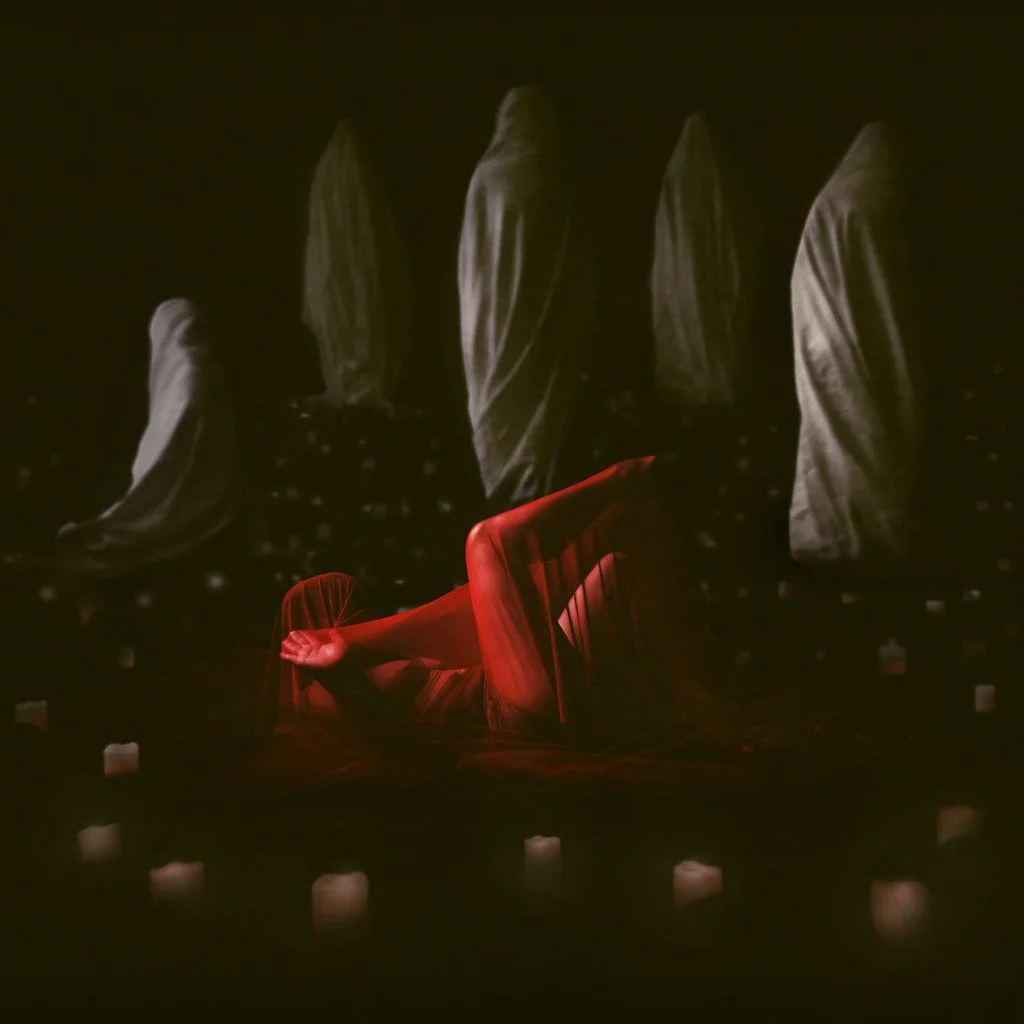
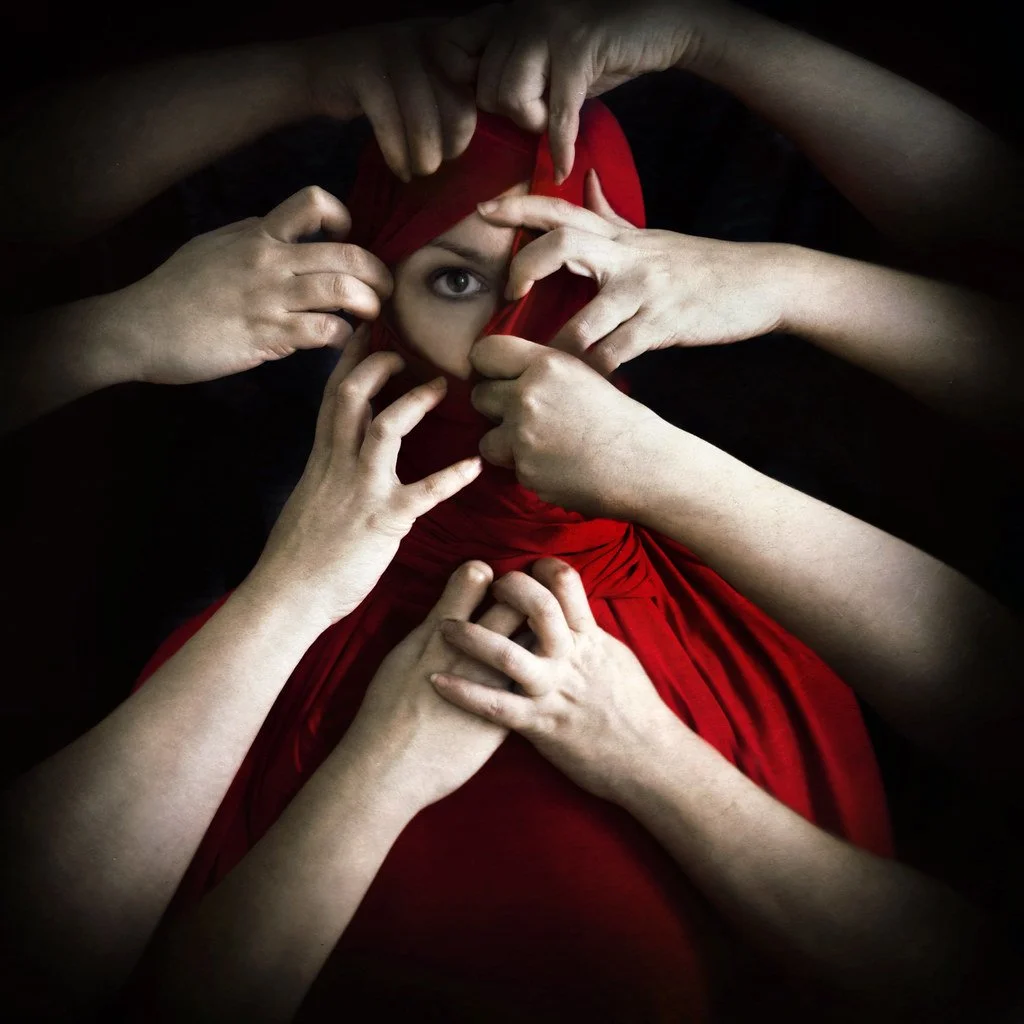
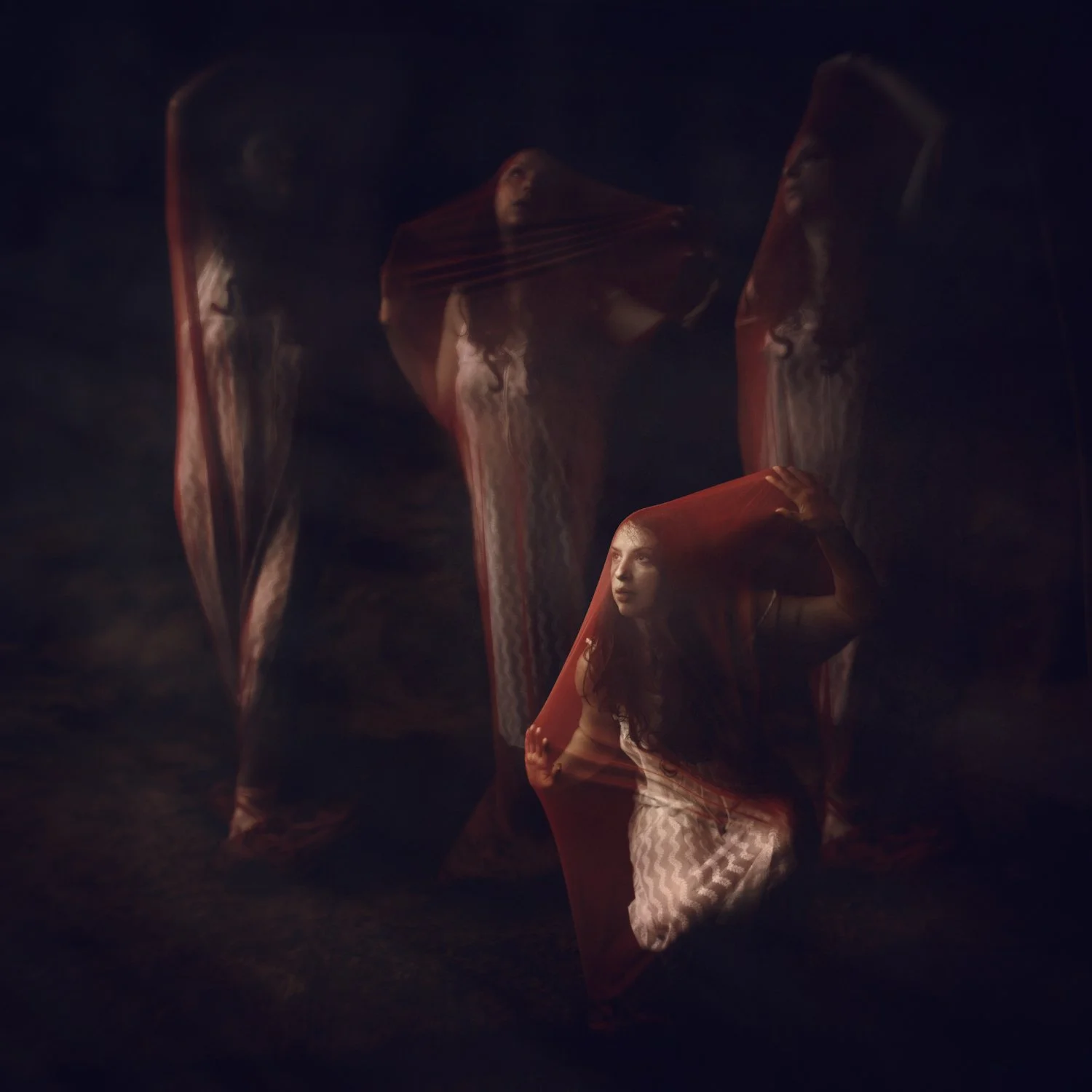
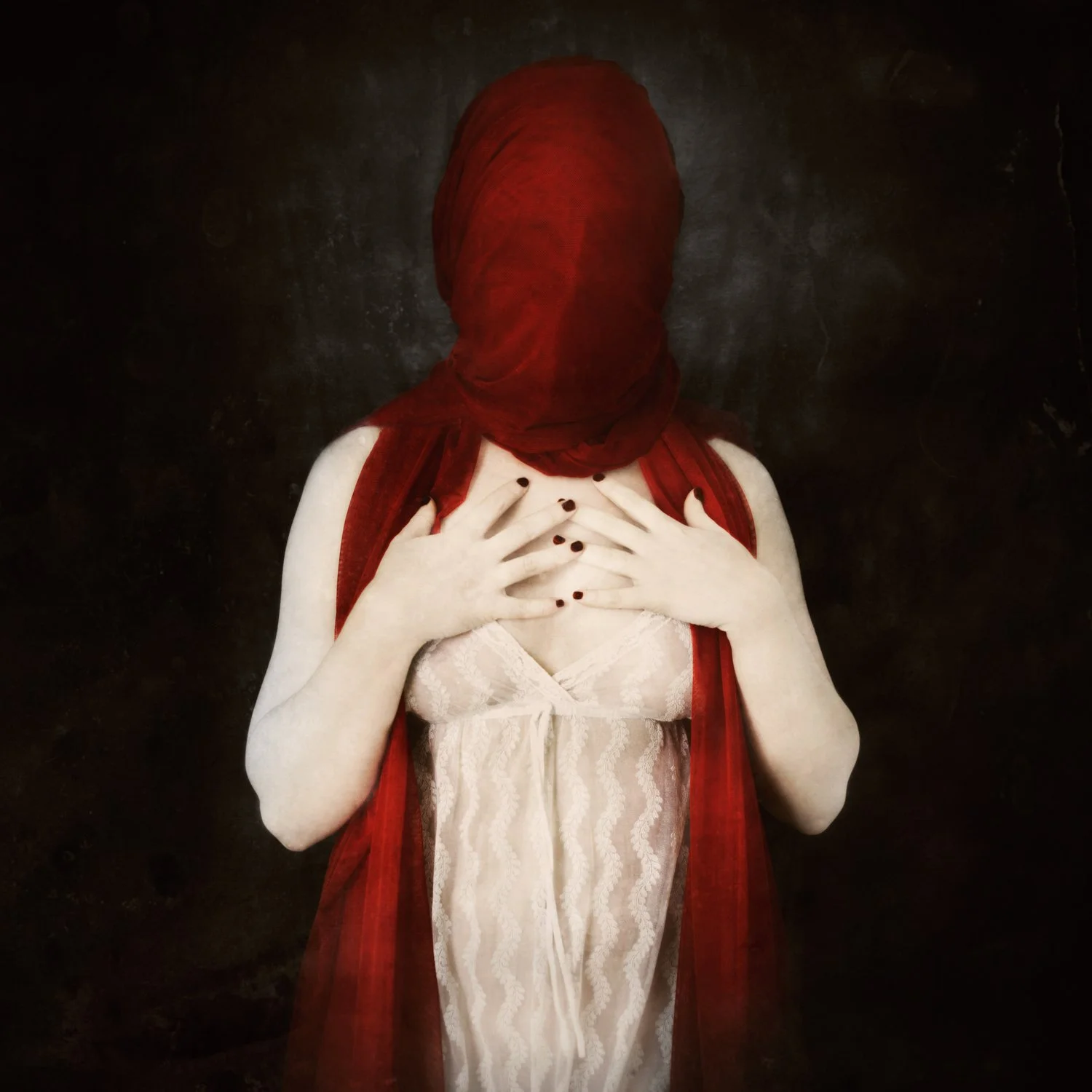
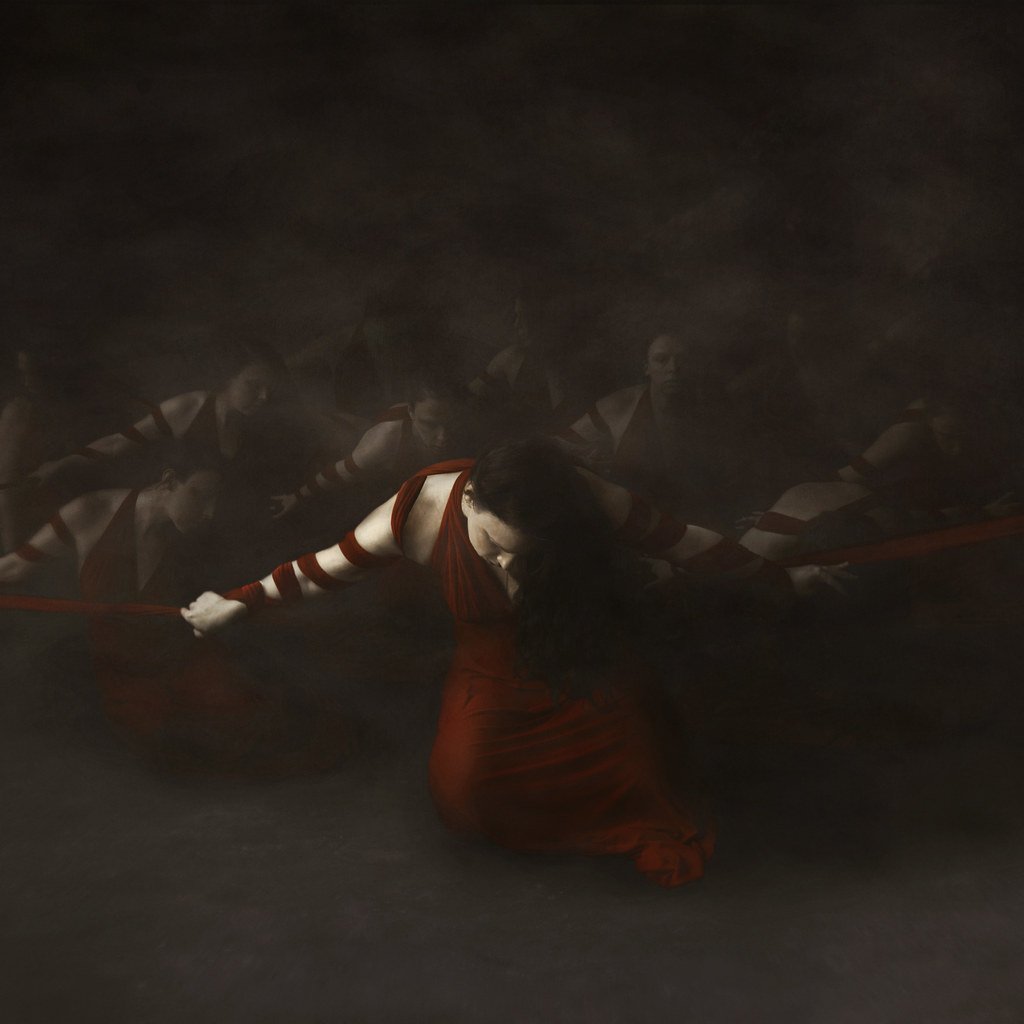
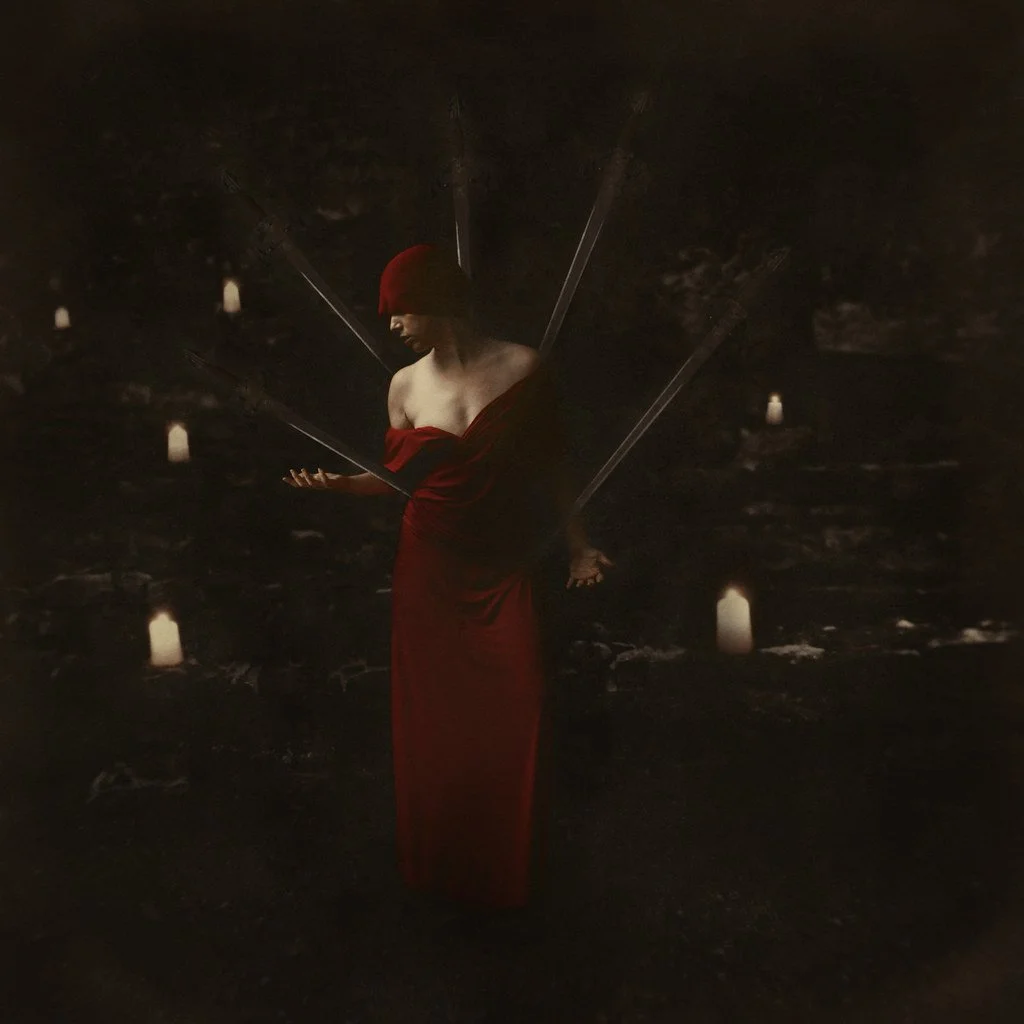
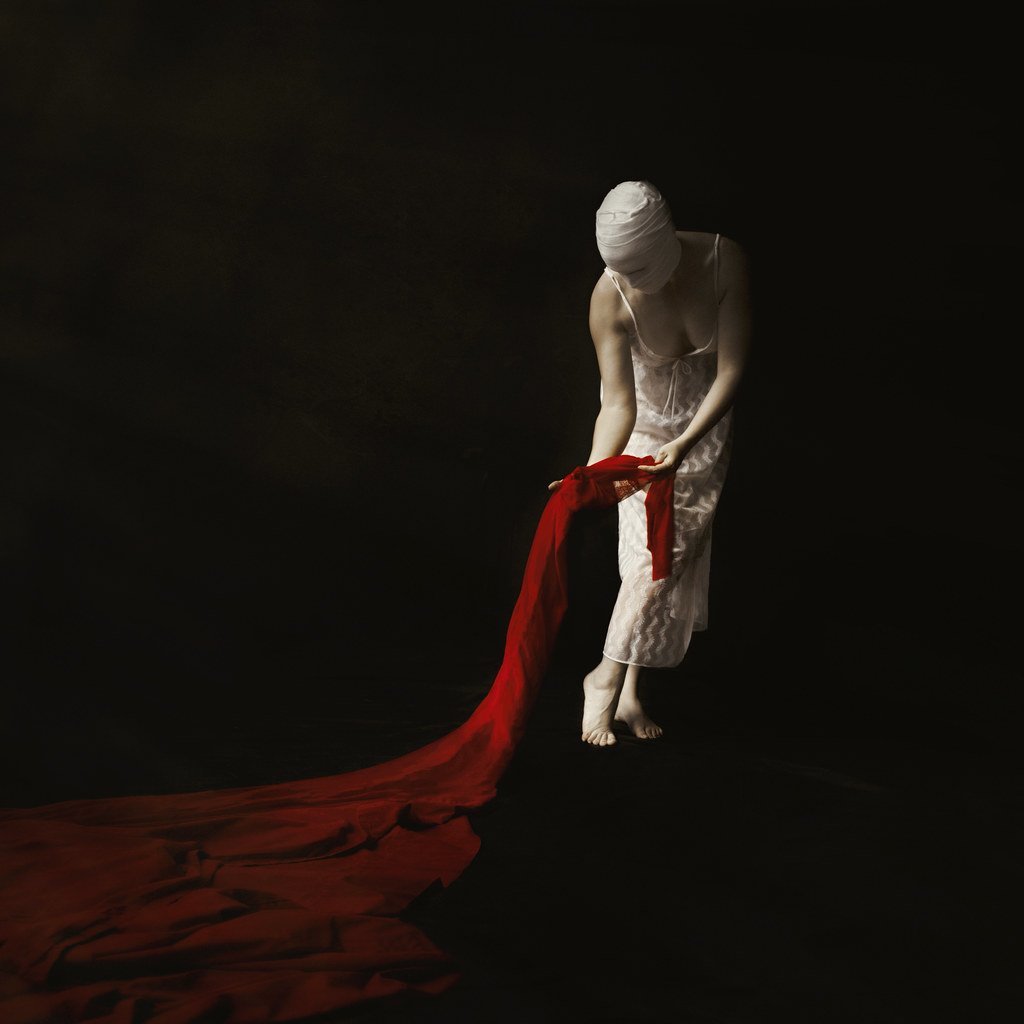
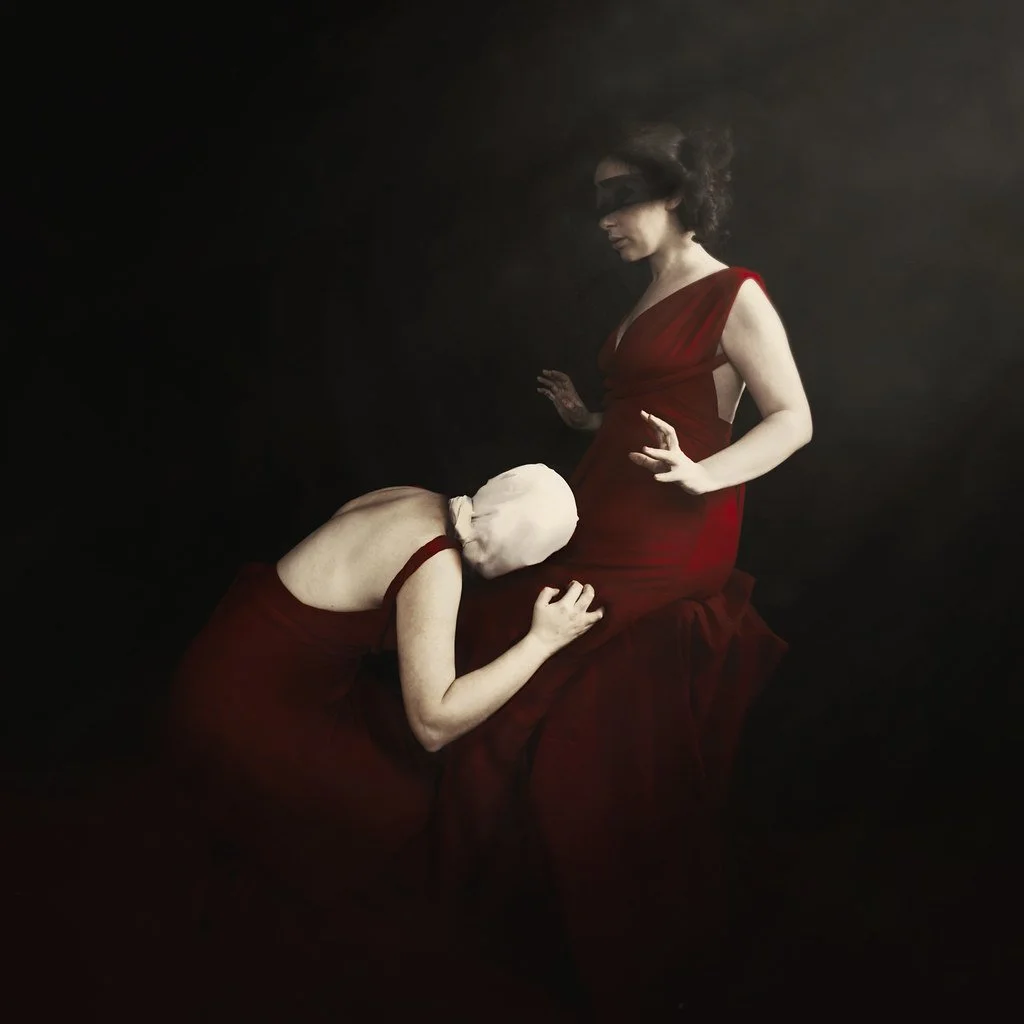
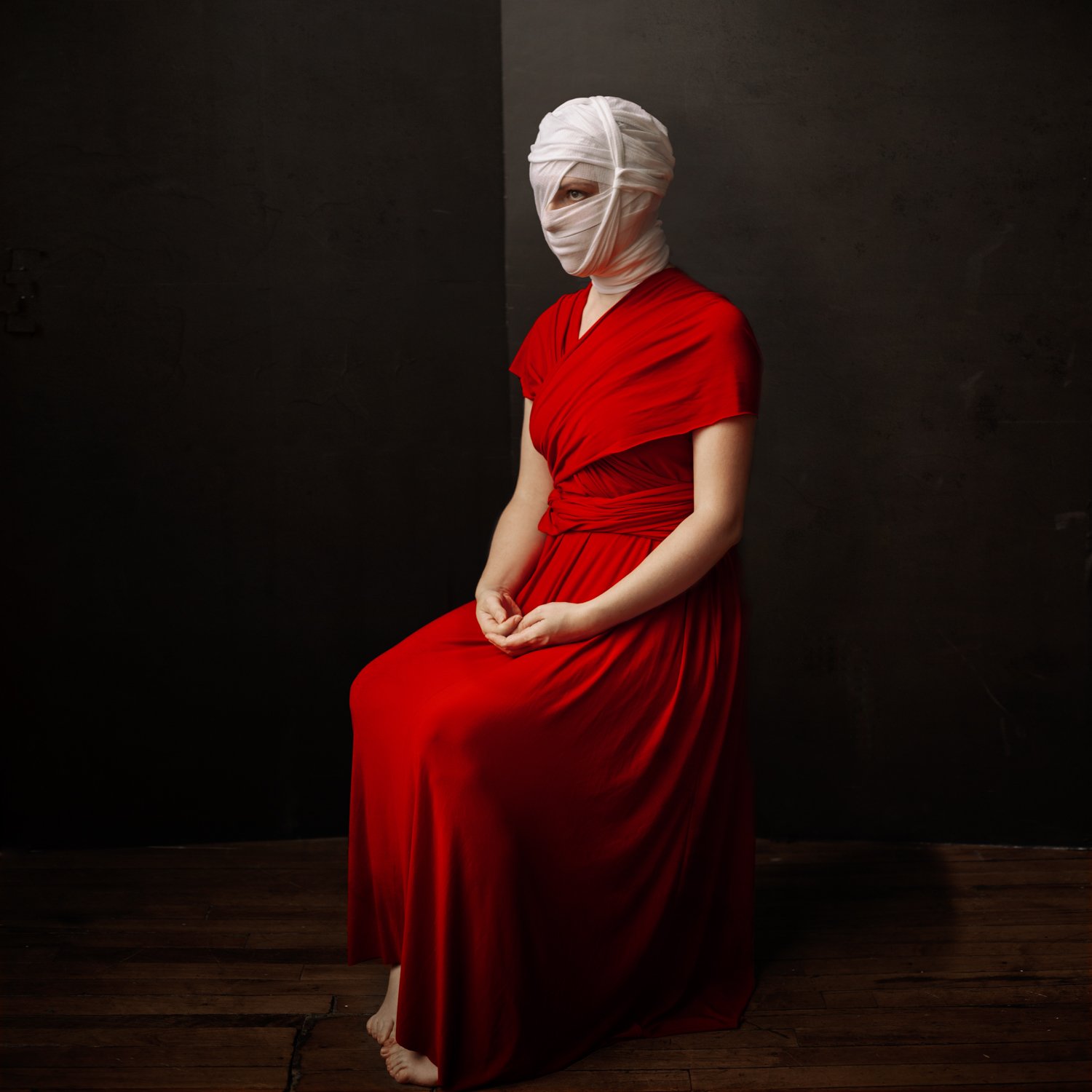
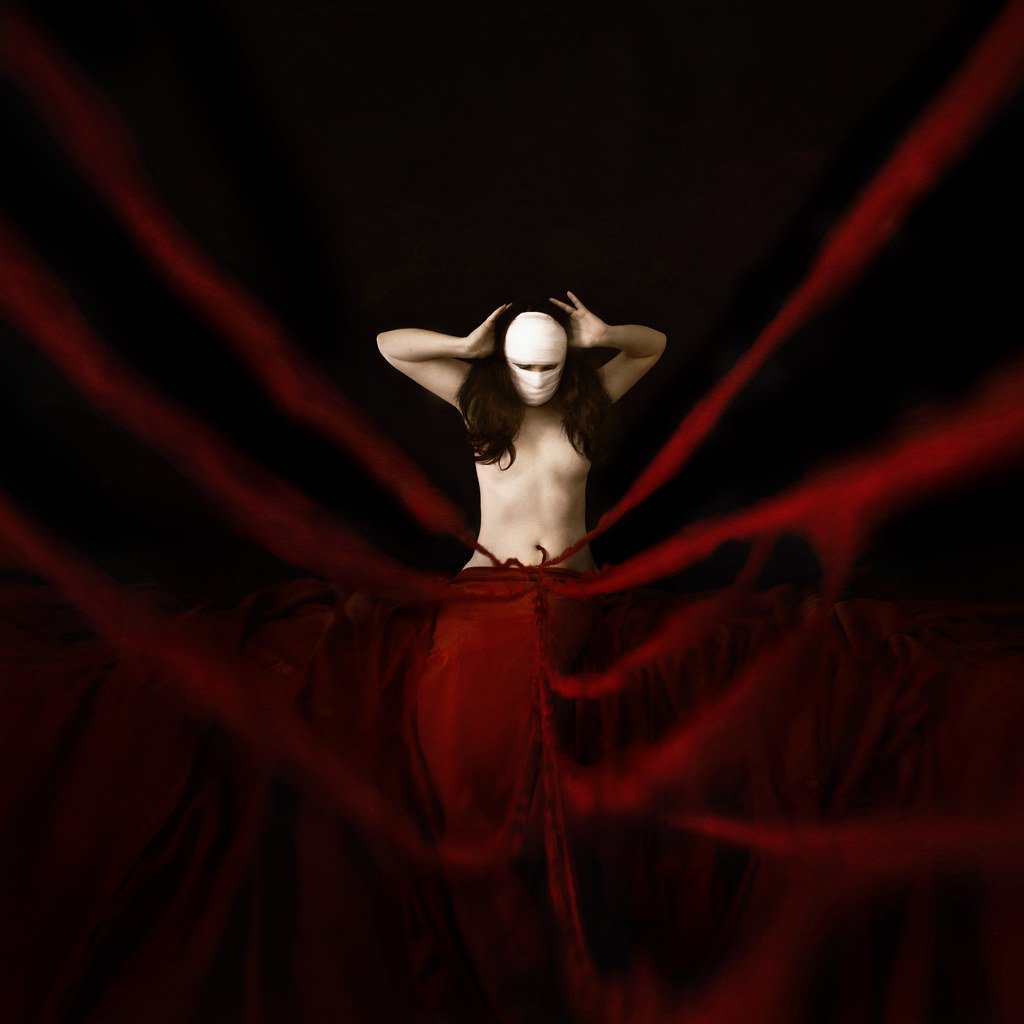
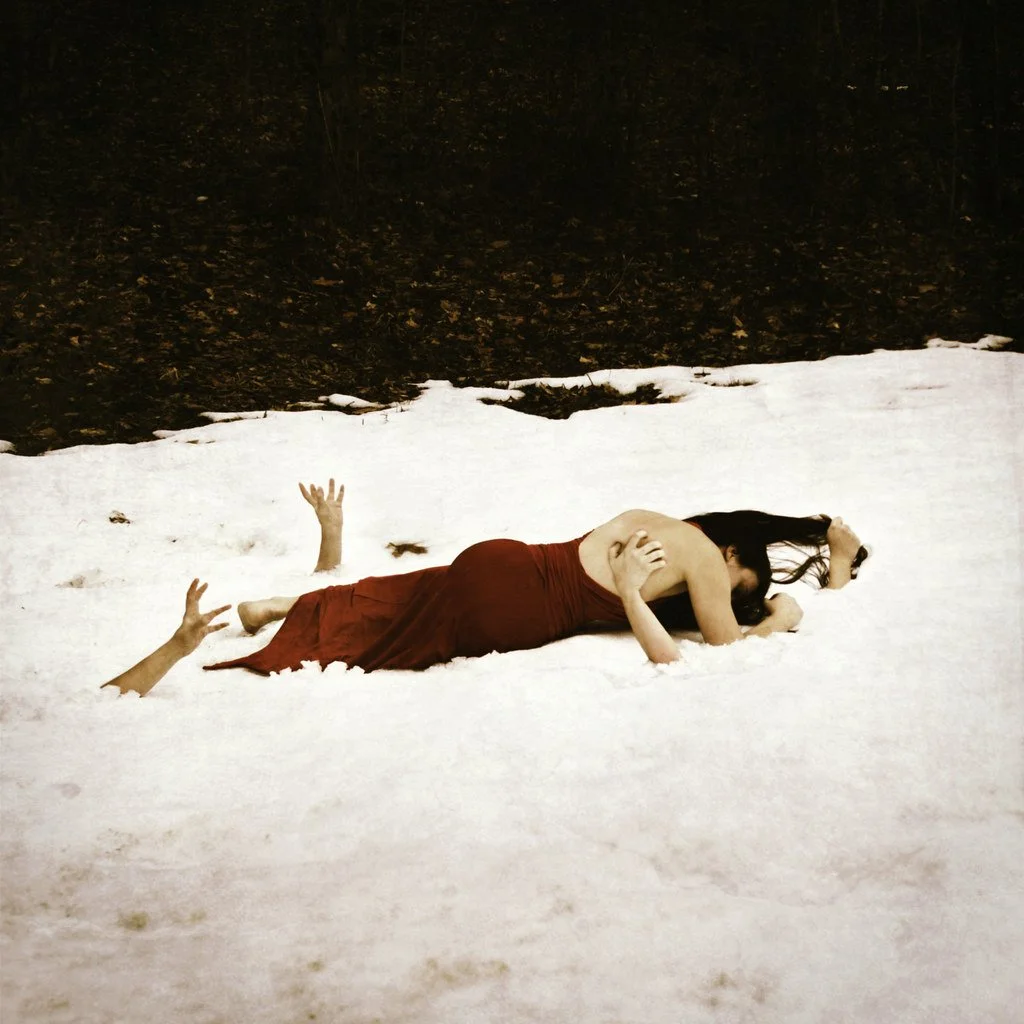
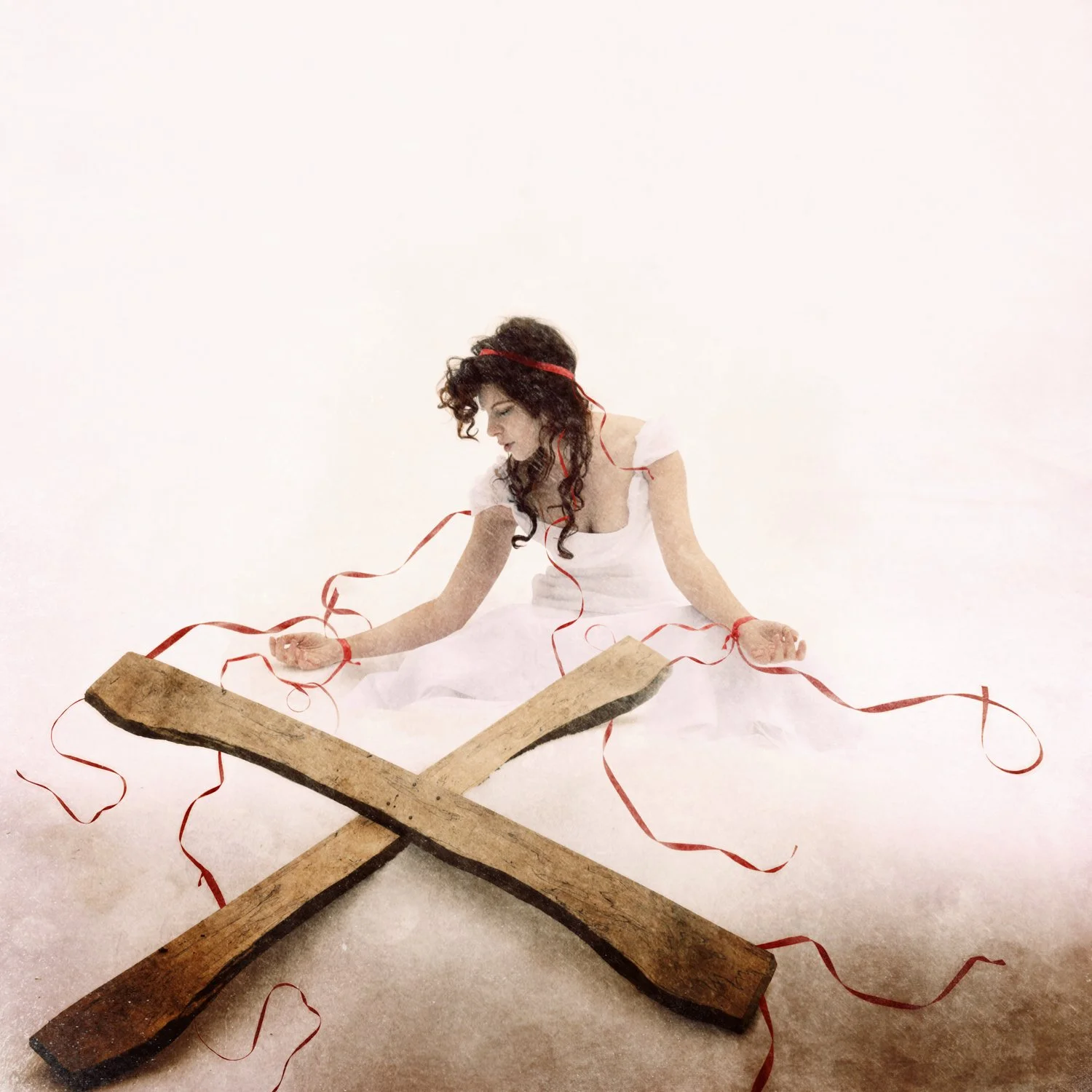
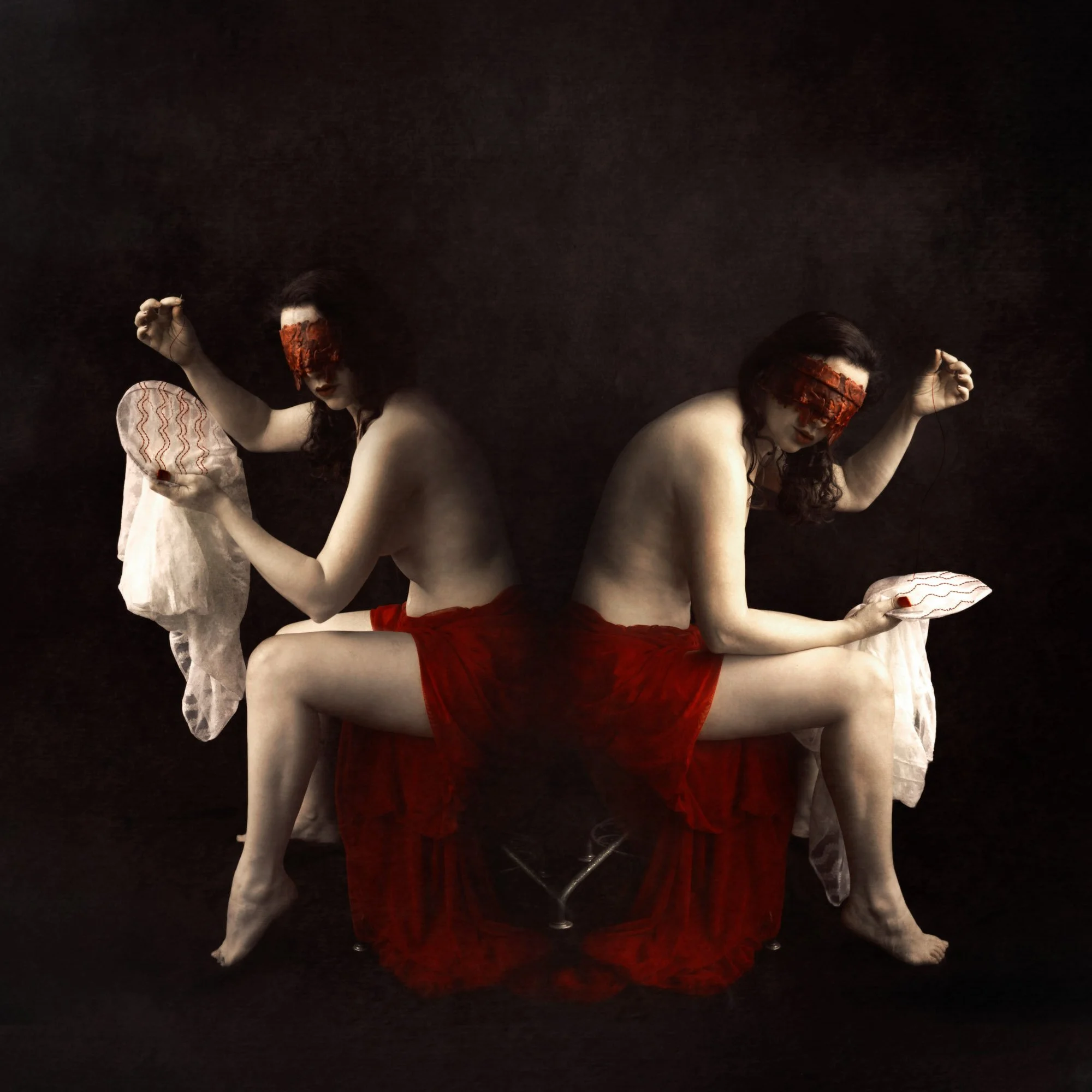
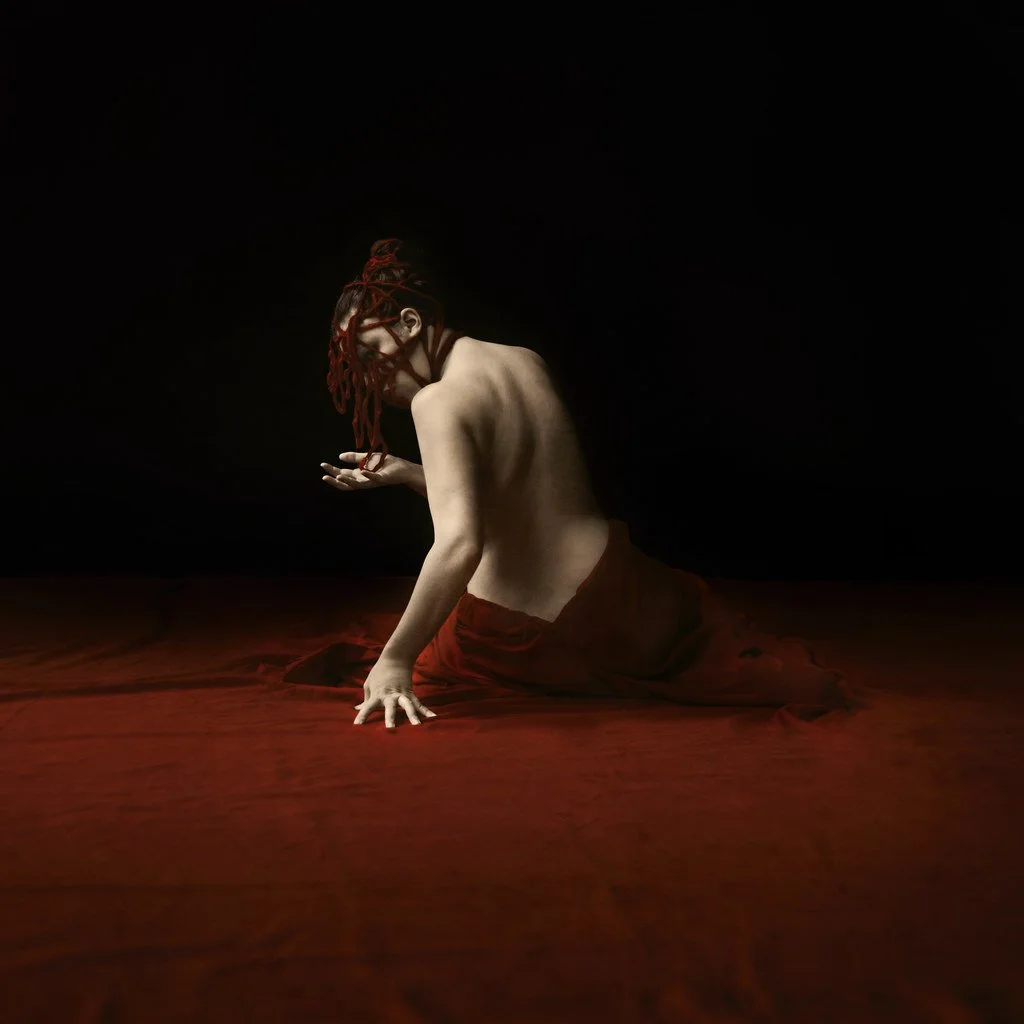
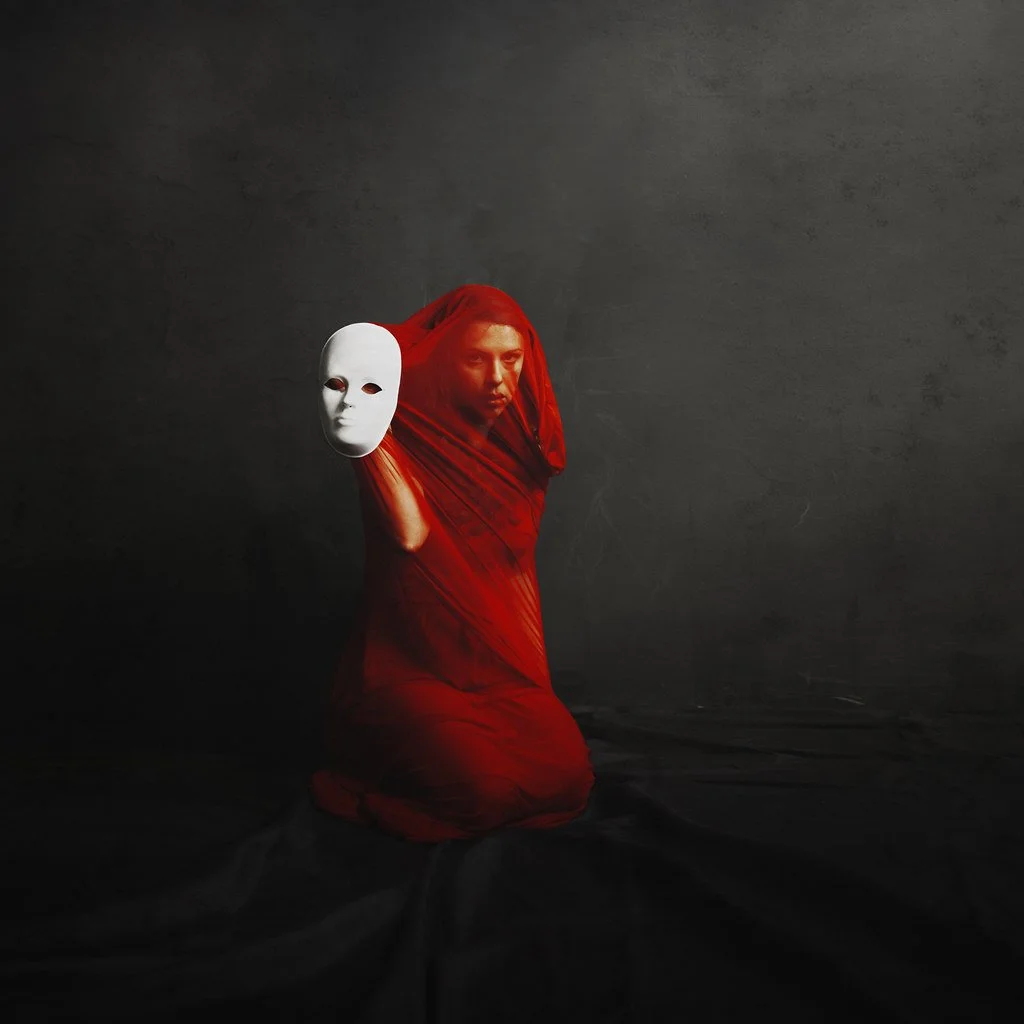
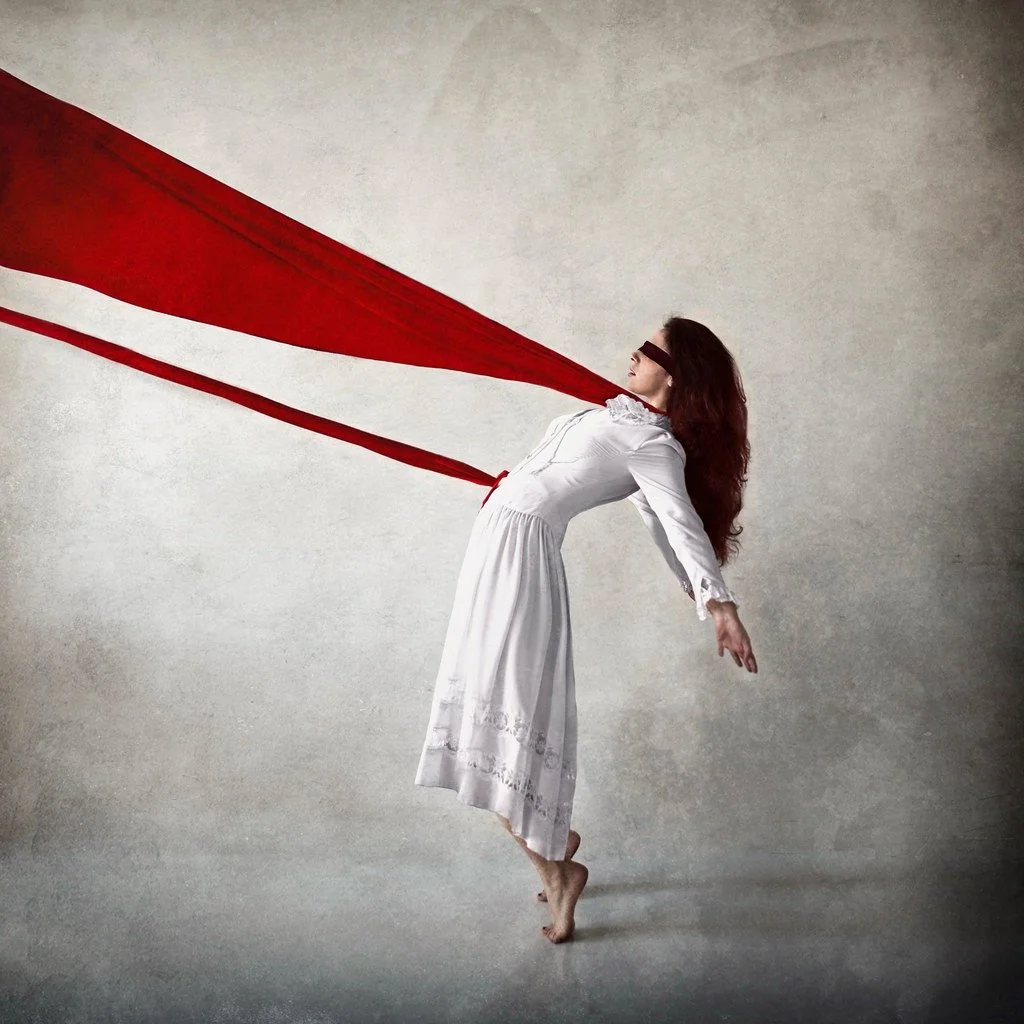
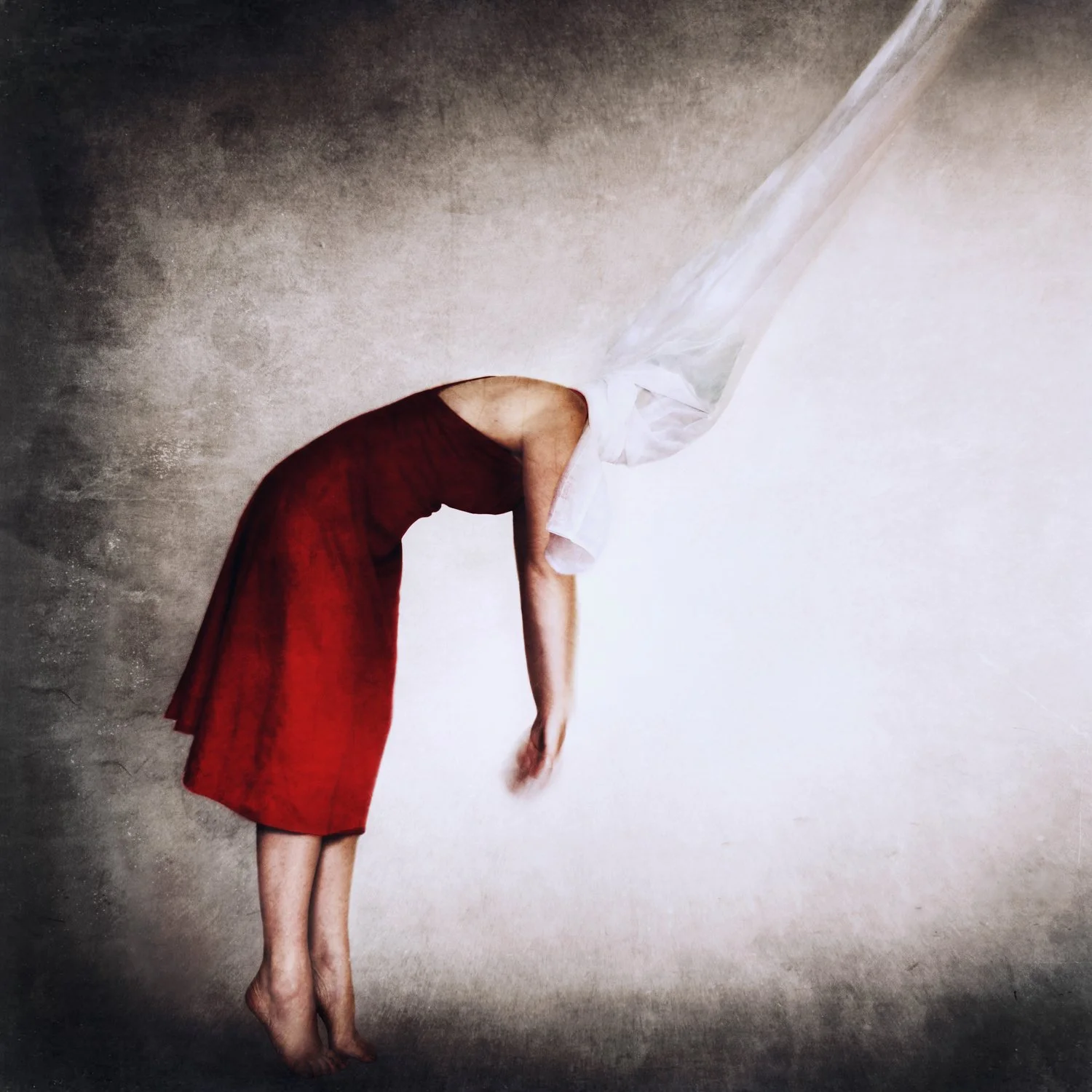
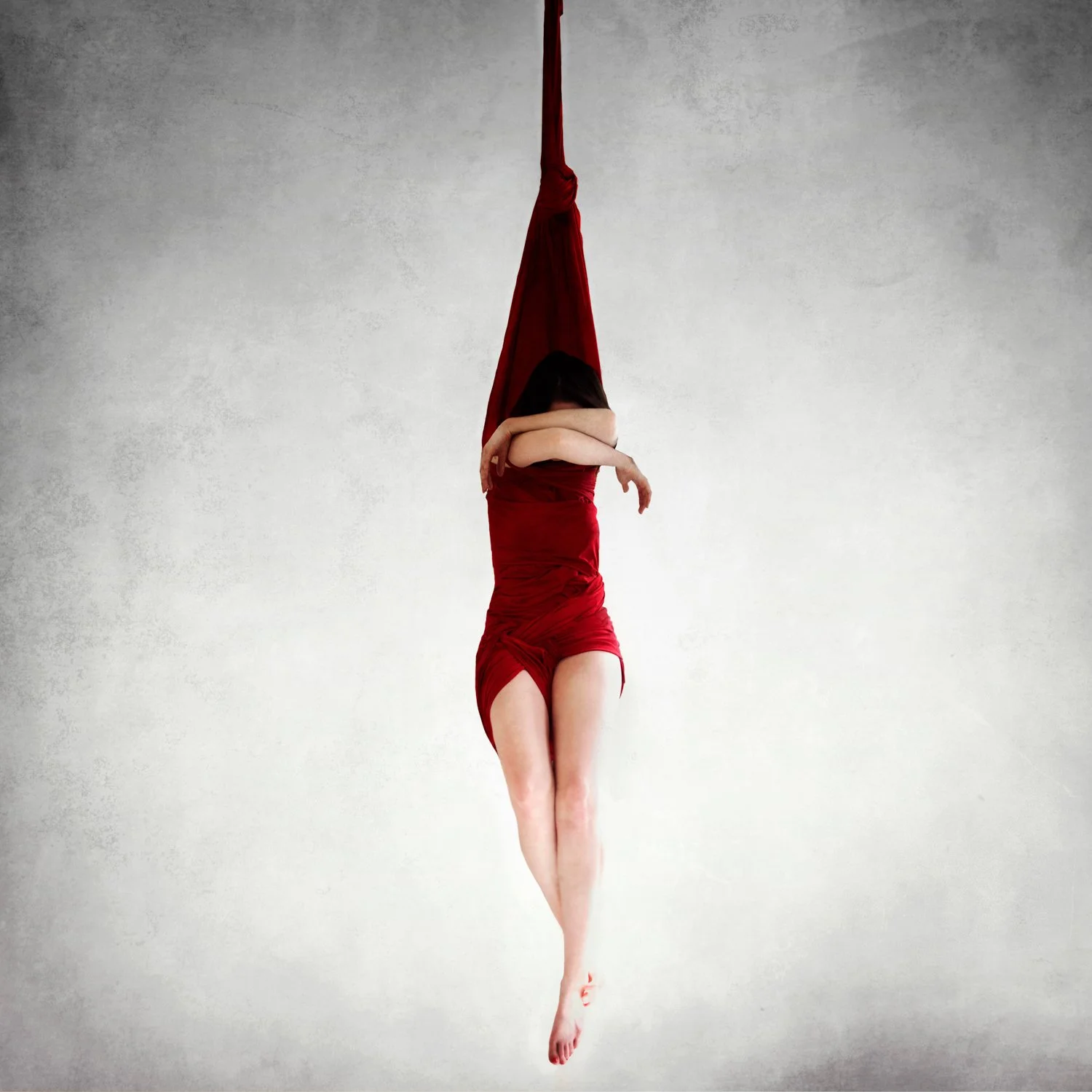
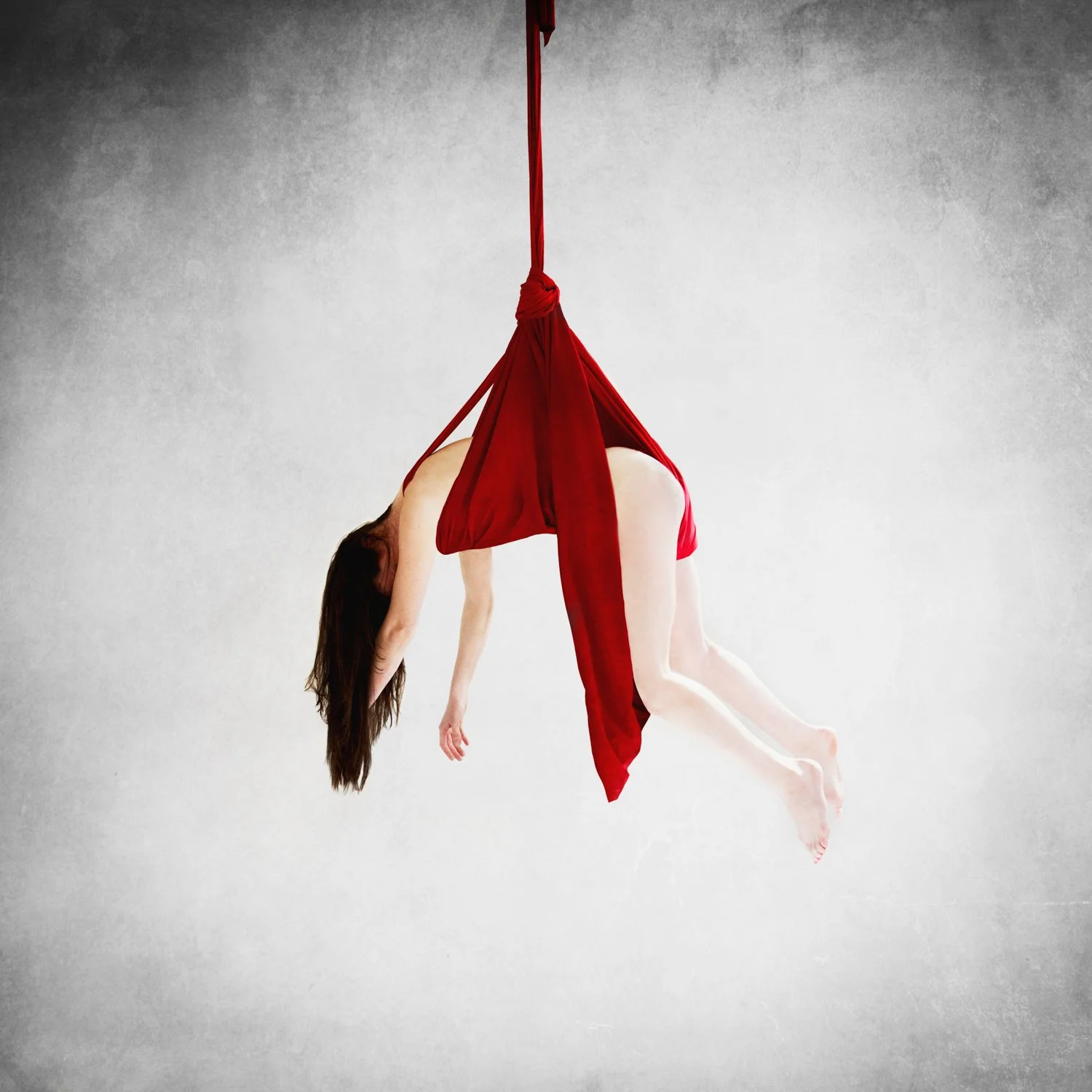
The images are constructed through staged self-portraiture, symbolic costuming, and restrained visual palettes. Faces are frequently obscured or turned inward, bodies bound or held in suspension, and actions interrupted mid-gesture. These visual strategies resist individualized portraiture in favor of representing shared psychological states. The recurring use of fabric—particularly red cloth—functions as both extension and obstruction of the body, evoking instruction, devotion, prohibition, and containment without anchoring the work to a single doctrine or institution.
While informed by personal history, Burdens of a White Dress resists autobiography as confession. Instead, it situates lived experience within broader cultural, religious, and political systems that normalize compliance and moral regulation. The work reflects on the quiet, often invisible processes through which authority is absorbed, rehearsed, and enforced internally—long after external control has receded.
Rather than offering resolution or redemption, the project remains attentive to recognition: the moment when learned obedience becomes visible, and the burden of belief can be named as a socially produced condition rather than an individual failing.
Movement I — Indoctrination / Binding
The formation of belief, purity, obedience, and enclosure.
This movement introduces the visual language of purity, obedience, and ritualized femininity. The body is instructed, veiled, positioned, and named by forces outside itself. Gesture is formal. Constraint is often aestheticized. Power appears orderly and benevolent.




Movement II — Internalization / Subsumption
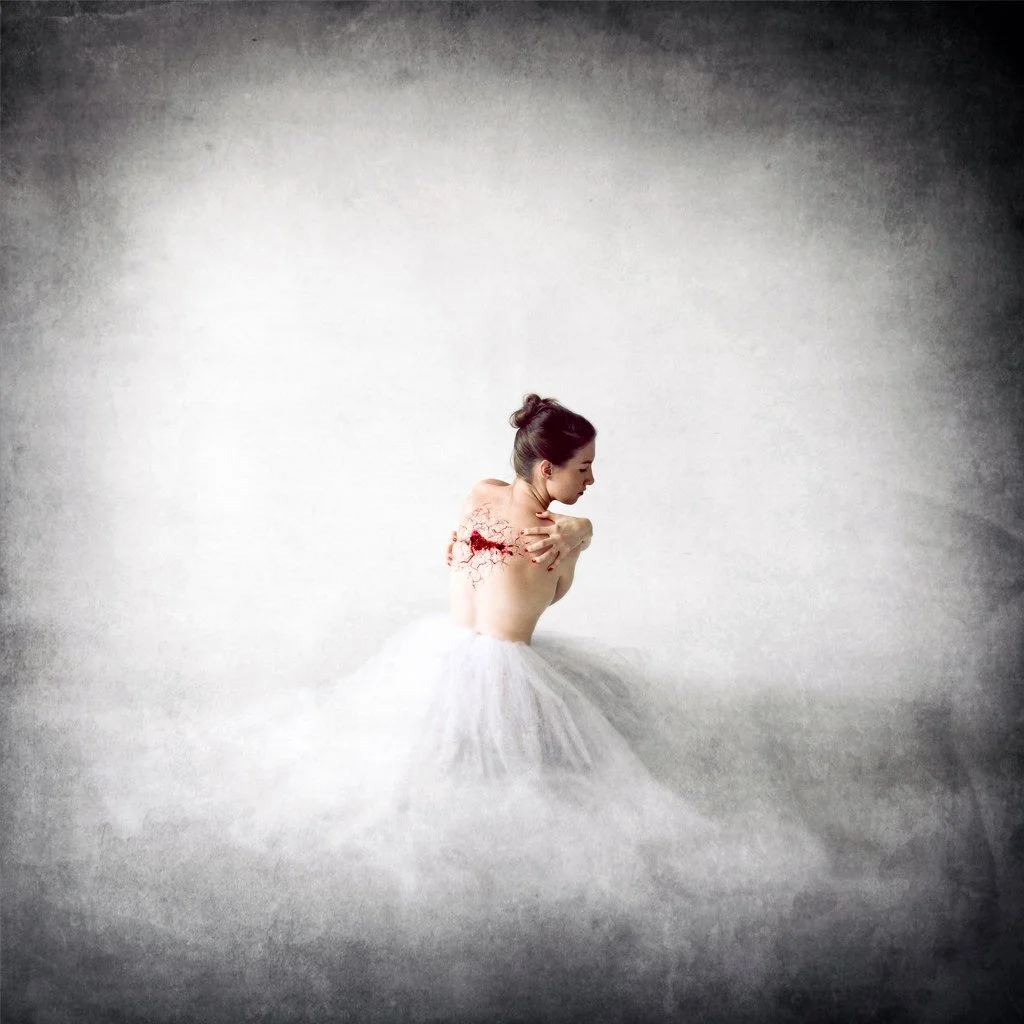
When control is no longer external — it lives inside the body.
Here, control no longer requires an external authority. The body enacts its own restraint. Red cloth, binding, and repetitive gesture suggest belief absorbed into muscle memory. Violence becomes quiet, intimate, and self-administered.

Movement III — Fracture / Resistance
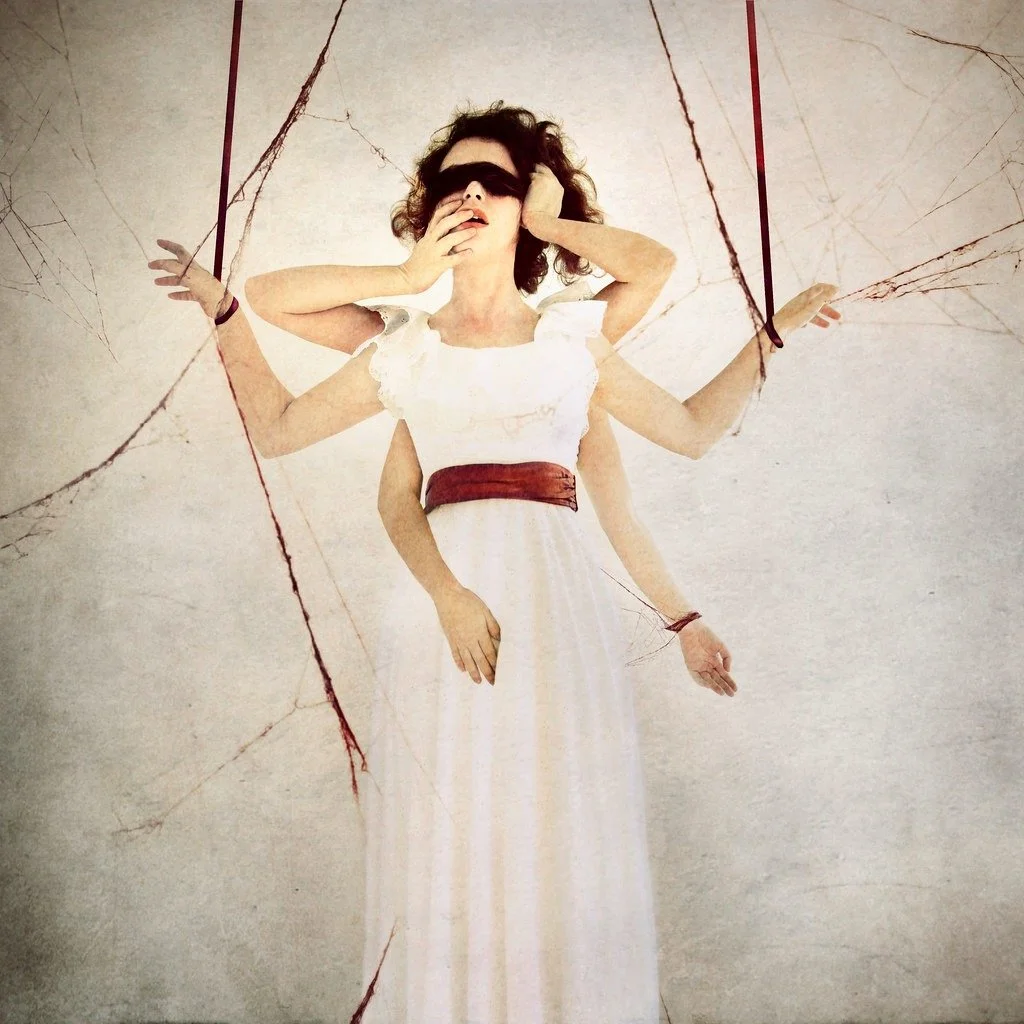
The moment belief cracks and the body resists what it has been taught.
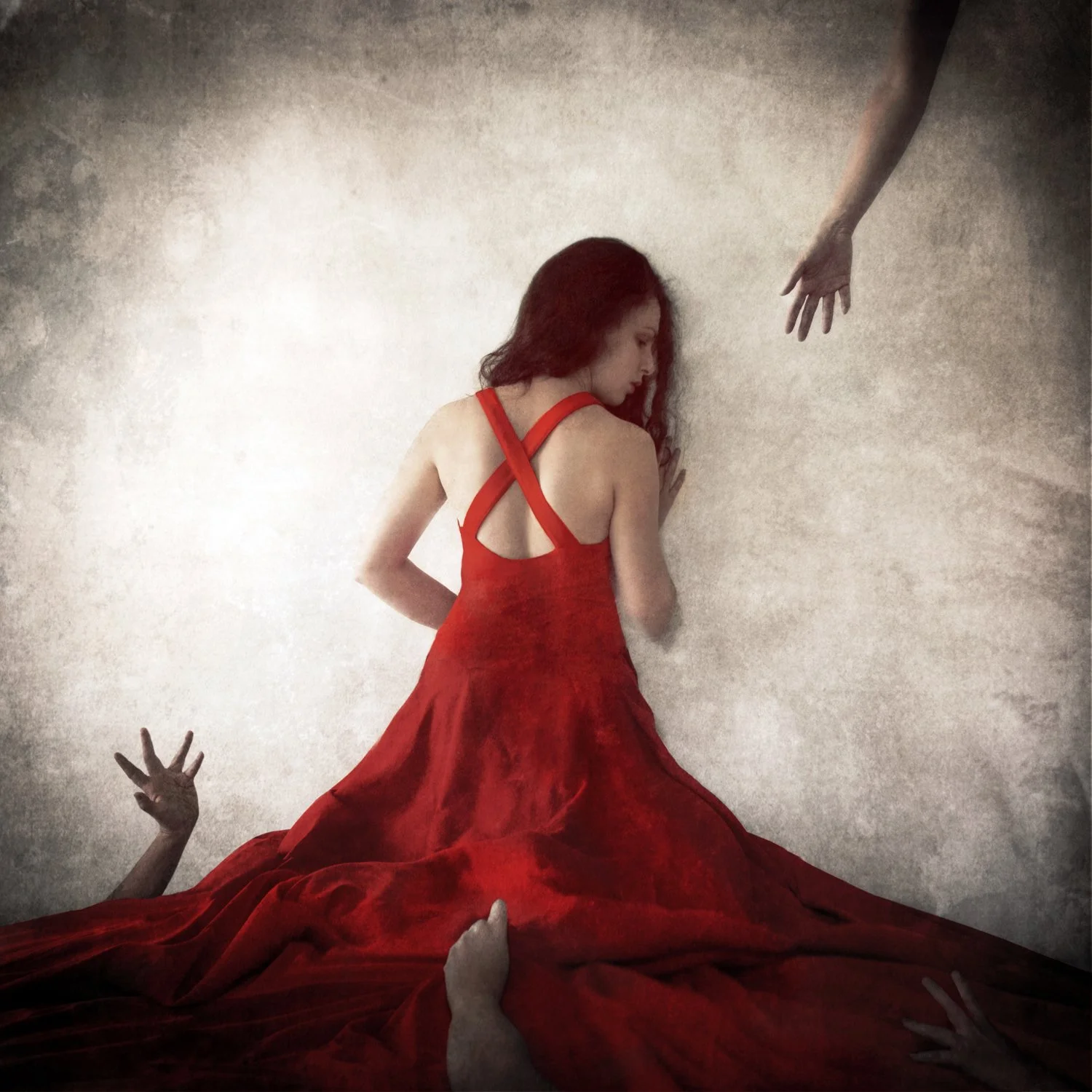
This movement marks psychological rupture. The figure splits, multiplies, or fragments. Hands intervene. The body appears doubled or divided, suggesting cognitive dissonance and the strain of maintaining contradictory selves.





Movement IV — Dissociation / Survival
Endurance when escape is not yet possible.
The body is suspended, asleep, floating, or arrested mid-gesture. Time feels slowed or stalled. These images reflect survival states—numbness, compliance, and withdrawal—where motion ceases but awareness has not yet returned.
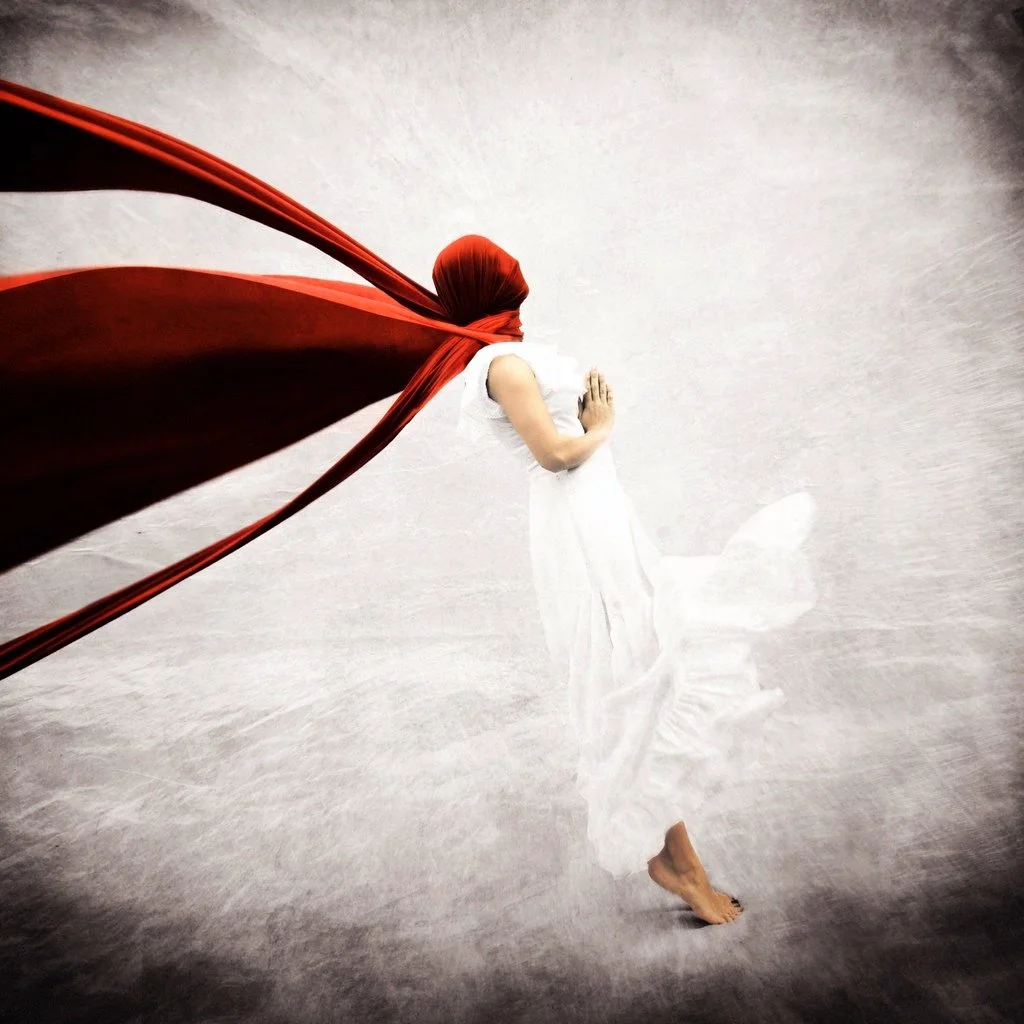

Movement V — Reorientation / Aftermath
Tentative autonomy, grief, and the long echo of control.
This final movement resists resolution. Some figures appear collapsed; others quietly resist. Power is ambiguous. Agency is partial. The body begins to orient itself without instruction, though remnants of the original script persist.