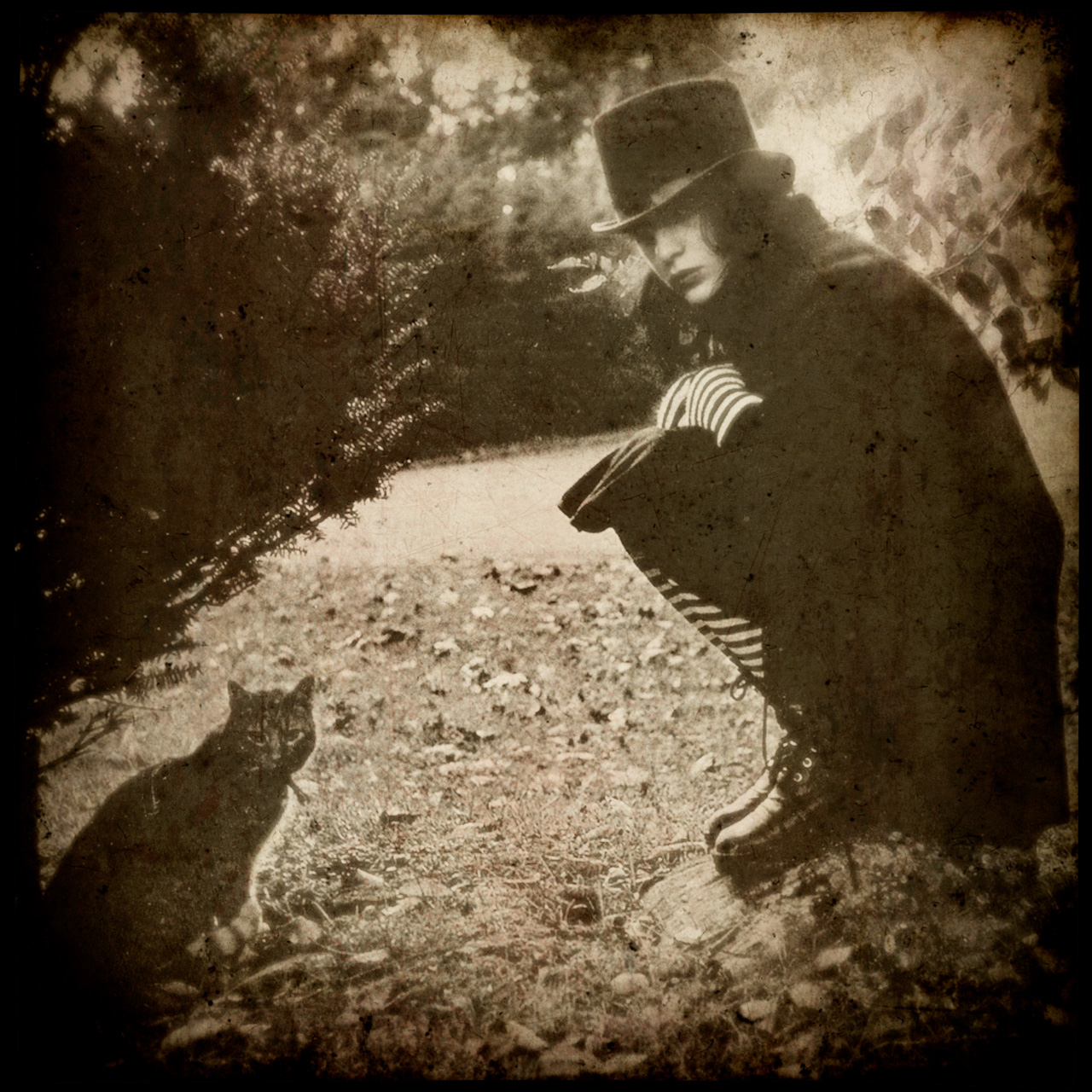
Don’t Wake the Scarecrow
2009 - 2011
Don’t Wake the Scarecrow uses the visual language of fairy tale and pastoral myth to examine systems of coercive control, psychological enclosure, and the quiet mechanisms of belief formation. Drawing from both staged figures and uninhabited landscapes, the series explores how ideology embeds itself not only in bodies, but in places—fields, houses, thresholds, and domestic terrains that appear benign yet hold latent authority.
Unlike my later work, this is the only series in which landscapes stand alone. These empty spaces function as psychological sites rather than settings: locations where control is implied rather than enacted, and where absence becomes a form of presence. Figures, when they appear, are often caught between compliance and resistance—posed, masked, costumed, or partially obscured—suggesting a self negotiating visibility within a prescribed narrative.
The work draws on familiar fantasy tropes to create an initial sense of nostalgia or safety, which is then subtly destabilized. This tension mirrors the experience of high-demand groups and controlling relationships, where enchantment and threat coexist. Don’t Wake the Scarecrow sits as a formative precursor to my later investigations of belief, embodiment, and autonomy, marking an early shift from personal mythology toward a sustained visual inquiry into how power operates quietly, relationally, and over time.